Also Known As:
Hoseyn Salami
Hossein Salami
Hussayn Salami
حسین سلامی
Weapon Program:
- Military
- Drone
Related Country:
- Russia
Address:
Iran
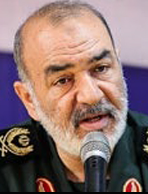
Commander from April 2019 to June 2025 of the Islamic Revolutionary Guard Corps (IRGC), part of Iran's military that contributes to Iran's nuclear and missile programs and oversees Iranian arms transfers and other material support to non-state armed groups and terrorist organizations abroad.
According to the European Union, was responsible for Iran's foreign military cooperation related to unmanned aerial vehicles (UAVs), including the supply of UAVs to Russia for use in the Russian war against Ukraine.
Served as a member of the Iranian Supreme National Security Council; according to the European Union, participated in Supreme National Security Council meetings that resulted in orders to use lethal force to suppress the November 2019 protests in Iran.
Held the rank of IRGC major general; from 2009 to 2019, served as deputy commander of the IRGC; previously served as commander of the IRGC Aerospace Force.
Had been advised by IRGC officer Hamidreza Moghadam Far; according to the U.S. Department of the Treasury, had received intelligence reports from Fars News Agency, an IRGC-affiliated news agency.
Determined by the U.S. Department of State in 2024 to meet the criteria for immigration restrictions under Section 221 of the Iran Threat Reduction and Syria Human Rights Act for senior officials of the Government of Iran that are involved in Iran's illicit nuclear activities, proliferation of weapons of mass destruction or their delivery systems, support for international terrorism, or the commission of serious human rights abuses against Iranian citizens or their family members.
Passport number (Iran) was D08531177.
Born in Golpayegan, Isfahan Province, Iran, in 1960; killed during Israeli military strikes against Iran in June 2025.
Sanctions
Designated by the U.N. Security Council on December 23, 2006, pursuant to resolution 1737 (2006), as a person involved in or supporting Iran's proliferation-sensitive nuclear activities or development of nuclear weapon delivery systems; with some exceptions, the designation requires states to freeze assets that are owned or controlled by the person, directly or indirectly, and to ensure that assets are not made available to the person; the resolution also calls on states to prevent the person from entering or transiting through their territories.
Previously removed from the U.N. list on October 18, 2023, following the expiration of targeted sanctions on Iran; returned to the U.N. list on September 28, 2025, as part of the reimposition of sanctions on Iran.
Listed by the European Union on April 20, 2007, as a person linked to Iran's proliferation-sensitive nuclear activities or Iran's development of nuclear weapon delivery systems; also listed by the European Union on July 27, 2010, as a person linked to Iran's Islamic Revolutionary Guard Corps (IRGC); also listed by the European Union on April 12, 2021, as a person responsible for serious human rights violations in Iran; also listed by the European Union on November 14, 2022, as a person responsible for actions that undermine or threaten the territorial integrity, sovereignty, and independence of Ukraine; with some exceptions, E.U. member states must freeze assets owned or controlled by the person, directly or indirectly, prevent assets from being made available to the person, and prevent the person's entry into or transit through their territories.
Added on October 25, 2007, to the Specially Designated Nationals (SDN) list maintained by the U.S. Department of the Treasury's Office of Foreign Assets Control (OFAC), freezing the person's assets under U.S. jurisdiction and prohibiting transactions with U.S. parties, pursuant to Executive Order 13382, which targets proliferators of weapons of mass destruction (WMDs) and their delivery systems; also designated on October 31, 2017, pursuant to Executive Order 13224, which targets terrorists and those providing support to terrorists or acts of terrorism; also subject to the Iranian Financial Sanctions Regulations, which restrict the use of the U.S. financial system for transactions involving Iranian entities.
Foreign parties facilitating transactions for the person or otherwise assisting the person may be subject to U.S. sanctions; foreign financial institutions facilitating transactions for the person may be prohibited from opening or maintaining correspondent or payable-through accounts in the United States; subject to heightened U.S. export license requirements (with a presumption of denial) due to involvement in activities related to terrorism and WMD proliferation.
Sanctioned by the governments of Australia, Canada, Japan, and the United Kingdom, restricting business and financial transactions with the person and/or freezing the person's assets in those countries.