Publication Type:
- Weapon Program Background Report
Weapon Program:
- Nuclear
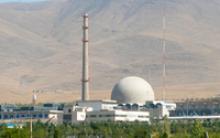
1967: Start-up of the U.S.-supplied 5-megawatt Tehran Research Reactor (TRR).
1970: Iran signs the Nuclear Nonproliferation Treaty (NPT).
1974: The Atomic Energy Organization of Iran (AEOI) is established.
1979: German construction of the Bushehr nuclear power reactors, begun in the mid-1970s, is suspended.
Mid-1980s: Iran conducts laboratory scale experiments to produce heavy water at the Esfahan Nuclear Technology Center (ENTC).
1981-93: Iran carries out bench scale preparation of UO2 (uranium dioxide) at ENTC, and bench scale preparation of several uranium compounds, including UF6 (uranium hexafluoride), at the Tehran Nuclear Research Center (TNRC).
1985: Iran launches a centrifuge enrichment program.
1987: Iran receives an offer from a foreign intermediary that includes a disassembled P-1 centrifuge, drawings and specifications for centrifuge production and for a "complete plant," and materials for 2,000 centrifuge machines; Iran claims to have received only drawings and some centrifuge components from the intermediary.
1987-88: Bushehr reactors are heavily damaged by Iraqi bombing raids.
1988: Iran approves a project for the production of polonium-210 in the Tehran Research Reactor; in conjunction with beryllium, polonium-210 can be used as a neutron initiator in some nuclear weapon designs.
1988: Iran signs an agreement with Argentina for the provision of fuel elements for the Tehran Research Reactor, containing 115.8 kg of uranium enriched to up to 20% U-235.
1988-93: Iran irradiates 7 kg of UO2 targets at the Tehran Research Reactor and extracts small quantities of plutonium from some of the targets.
1988-95: Iran conducts centrifuge research and development at TNRC.
1990: Iran signs a ten-year nuclear cooperation agreement with China.
1991: Iran illicitly imports 1,800 kg of uranium in the form of UF4 (uranium tetrafluoride), UF6, and UO2.
1991-2000: Iran's secret laser enrichment program consumes 30 kg of undeclared uranium metal. Iran claims to have achieved an average enrichment level of 8-9% U-235, with some samples approaching 15% U-235.
1992: After a week-long inspection in Iran, an International Atomic Energy Agency (IAEA) team finds no evidence that Iran has a nuclear weapon program.
1993: The Central Intelligence Agency (CIA) concludes that Iran is 8-10 years away from acquiring nuclear weapons and says that foreign assistance will be critical to the effort.
1994: Iran signs a contract with China's National Nuclear Corporation for the supply of two 300-megawatt power reactors.
1994-96: Iran receives drawings for the P-1 centrifuge, components for 500 P-1 machines, and drawings for the more advanced P-2 centrifuge.
1995: Iran signs a contract with Russia to complete one of the Bushehr reactors.
July 1995: Iran purifies some of the plutonium extracted between 1988 and 1993 at TNRC and prepares a disc from the solution.
Mid-1990s: Iran decides to construct a heavy water reactor.
October 1997: The U.S. reveals that, in "written, confidential communications" to U.S. officials, China has pledged that it will not engage in new nuclear cooperation with Iran. The pledge exempts two existing Chinese projects in Iran: a "Zero Power Reactor" and a "Zirconium Tube Factory."
February 1998: U.S. pressure forces Turboatom, a Ukrainian manufacturer of steam turbines, to abandon its $45 million deal to supply turbines to Bushehr.
March 1998: The CIA reports that Iran is "attempting to acquire fissile material and technology for weapons development" under the guise of establishing a nuclear fuel cycle for its civilian energy program.
April 1998: Russia proposes to build a research reactor in Iran fueled by 20%-enriched uranium.
August 1998: Iran purifies additional plutonium extracted between 1988 and 1993 at TNRC and prepares a second disc from the solution.
1999-2002: Iran conducts a series of undeclared centrifuge tests at the Kalaye Electric Company. Using imported UF6, Iran achieves an enrichment level of 1.2% U-235.
April 1999: The Izhorskiye Zavod machine-building company of St. Petersburg begins production of equipment for the primary circuit at Bushehr, including the reactor vessel, steam generator casing, and internals.
2000: Construction begins on a uranium ore concentration plant at Gchine, known as "Project 5/15."
March 2000: The Iran Nonproliferation Act is signed into law, authorizing the U.S. President to sanction foreign persons for proliferation-related transfers to Iran since January 1, 1999.
April 2000: The Czech government, under pressure from the United States, bans companies from supplying parts to Bushehr. The ZVVZ Milevsko company had planned to provide air conditioning equipment.
June 2000: Russia's deputy minister for atomic energy says the Bushehr plant will be completed in 2002. Russia is expected to earn $1 billion from the project.
July 2000: Iran provides the IAEA with preliminary design information on the Uranium Conversion Facility (UCF) under construction at ENTC.
October 2000: The Director of the CIA's Nonproliferation Center testifies before Congress that Iran is attempting to develop the capability to produce both plutonium and highly enriched uranium (HEU).
March 2001: After pressure from the United States, Russia reportedly cancels plans to sell Iran laser equipment that could be used to support uranium enrichment.
Early 2002: The AEOI contracts with a private company to develop the P-2 centrifuge. The company develops carbon composite rotors for the centrifuge and conducts some mechanical tests without nuclear material.
Early 2002: Iran's Ministry of Defense allegedly begins a warhead development program that involves the design of a re-entry vehicle for the Shahab-3 missile; this re-entry vehicle is assessed by the IAEA as "quite likely" able to accommodate a nuclear warhead.
August 2002: The National Council of Resistance of Iran (NCRI), an Iranian opposition group, reveals the existence of a secret nuclear facility at Natanz and a heavy water facility at Arak. According to the NCRI, the two sites are operated under the cover of front companies, Kala-Electric and the Mesbah Energy Company.
September 2002: Iran announces at the IAEA General Conference that it has an "ambitious" plan to construct, within the next 20 years, nuclear power plants with a total capacity of 6,000 MW.
December 2002: The existence of nuclear facilities at Arak (heavy water production plant) and Natanz (fuel enrichment complex) is confirmed by commercial satellite photographs.
February 2003: During discussions held with the IAEA, Iranian authorities acknowledge that a workshop at Kalaye had been used to produce centrifuge components, but claim that it had not enriched any uranium.
9 February 2003: Iranian President Mohammad Khatami announces that Iran is preparing to exploit uranium deposits discovered near Yazd, is building a yellowcake production plant nearby, is building an enrichment plant near Kashan, has completed a uranium oxide plant in Isfahan, and plans to build a fuel production facility.
21-22 February 2003: IAEA Director General Mohamed ElBaradei visits two new uranium enrichment facilities under construction at Natanz: a pilot fuel enrichment plant (PFEP) intended to hold 1,000 centrifuges, and a commercial-scale fuel enrichment plant (FEP), intended to hold more than 50,000 centrifuges. Iran also confirms the construction of a heavy water production plant at Arak.
5 May 2003: Iran informs the IAEA of its intention to construct a heavy water research reactor, the 40 MW(th) Iran nuclear research reactor (IR-40), at Arak. Iran also declares its intention to begin construction of a fuel manufacturing plant at Esfahan.
27 May 2003: The NCRI claims that Iran is operating two nuclear enrichment "sub-stations" for its main site at Natanz. According to the NCRI, the two sites are located in the Hashtgerd region, at Ramandeh, and at Lashkar Abad.
25 June 2003: Iran introduces UF6 into the first centrifuge at Natanz.
9-12 August 2003: The IAEA informs Iran that sampling results from the pilot plant at Natanz reveal particles of two types of HEU, indicating the possible presence of undeclared nuclear material. Iran claims that the contamination came from imported centrifuge components.
19 August 2003: Iran begins testing a small ten-machine centrifuge cascade at Natanz with UF6. The IAEA reports that the centrifuges at Natanz have been recognized as "an early European design;" they are referred to in subsequent IAEA reports as P-1 or IR-1 centrifuges.
October 2003: The IAEA reports that Iran is finalizing the installation of a 164-machine cascade at the Natanz pilot plant.
21 October 2003: Foreign Ministers from France, Germany, and the United Kingdom meet with Iranian officials and release a joint statement in which Iran agrees to adhere to the Additional Protocol and agrees voluntarily to suspend all uranium enrichment and reprocessing activities.
10 November 2003: Iran informs the IAEA that it will allow enhanced inspections under the Additional Protocol pending its entry into force, and that it will suspend all enrichment-related and reprocessing activities as of November 10.
18 December 2003: Iran signs the Additional Protocol.
1 February 2004: A senior Pakistani official tells journalists that A.Q. Khan has signed a detailed confession admitting that between 1989 and 1991 he provided Iran with designs, drawings, and components for the production of fuel for nuclear weapons.
24 February 2004: Iran informs the IAEA that it will stop manufacturing, testing, and assembling centrifuges as of March. However, Iran says that some centrifuge manufacturing will continue under existing contracts.
24 February 2004: The IAEA reports that Iran failed to declare its work on the more advanced P-2 centrifuge, and on efforts to produce polonium-210, which can be used as a neutron initiator in some nuclear weapons, and which took place between 1989 and 1993. In addition, environmental samples taken from Kalaye show greater than trace quantities of uranium enriched to 36% U-235.
29 March 2004: The head of the AEOI announces the suspension of centrifuge construction.
21 May 2004: Iran submits its initial declaration to the IAEA in compliance with the Additional Protocol. In the declaration, Iran provides information on the Gchine mine and mill, the Saghand mine, and the Ardakan Yellowcake Production Plant.
1 June 2004: In a report, the IAEA confirms Iran's suspension of enrichment and reprocessing activities, and concludes that Iran produced milligram quantities of plutonium, rather than the 200 micrograms estimated by Iran.
28 June 2004: The IAEA takes environmental samples at the Lavisan-Shian site in Tehran, which has been linked to alleged undeclared nuclear activities. According to Iran, the site was razed by the Municipality of Tehran during a two to three month period beginning in December 2003.
July 2004: Iran removes seals from equipment and centrifuge components located at Natanz, Pars Trash, and Farayand Technique and returns the seals to the IAEA.
August 2004: Iran begins processing about 37 tons of yellowcake at the UCF.
1 September 2004: The IAEA reports that it found particles of 54% U-235, with U-236 contamination, in samples taken from the surfaces of imported centrifuge components, which supports Iran's claim that the HEU contamination found at Kalaye and Natanz came from imported components. However, information from the country that provided the components indicates that not all Iranian HEU contamination may have originated in that country.
15 November 2004: The governments of France, Germany, and the United Kingdom, with the support of the European Union (E3/EU), reach an agreement with Iran in which Iran again agrees to suspend "all enrichment related and reprocessing activities" in return for the promise of nuclear, technological, and economic cooperation.
15 November 2004: The IAEA releases a report listing more than a dozen failures by Iran to meet its Safeguards obligations. The report reveals that uranium enriched to about 70% U-235 has been found in samples taken from Kalaye and on imported components stored at Natanz and Pars Trash.
17 November 2004: The NCRI accuses Iran of relocating nuclear activities from the Lavisan-Shian site to the Modern Defensive Readiness and Technology Center, both controlled by the Ministry of Defense.
18 November 2004: U.S. Secretary of State Colin Powell tells the media that the U.S. government has information suggesting that Iran is working on designs for mating a nuclear warhead to a missile.
22 November 2004: The IAEA installs seals and other tamper-indicating devices at the UCF to verify that no additional yellowcake is introduced into the uranium conversion process and that there is no further production of UF6.
18 February 2005: At the UCF, Iran completes conversion of 37 tons of yellowcake into ammonium uranyl carbonate (AUC), UF4 and UF6. The IAEA seals the UF4 and UF6 produced during this process and installs and seals cameras at UF6 withdrawal stations to ensure that there is no undeclared withdrawal of the UF6 remaining in the plant's process lines.
27 February 2005: Tehran and Moscow reportedly sign an agreement in which Russia would supply fuel for the Bushehr reactor, and Iran would return all spent fuel to Russia.
March 2005: The IAEA confirms that construction on the heavy water reactor building at Arak has started.
11 March 2005: The United States decides to stop blocking Iran's application to join the World Trade Organization and to consider on a case-by-case basis its attempts to buy spare parts for civilian aircraft, in support of European diplomacy with Iran.
May 2005: A U.S. National Intelligence Estimate on Iran assesses with "high confidence" that Iran is determined to develop nuclear weapons and that Iran could produce enough fissile material for a weapon by the end of the decade, if Iran progressed more rapidly than it has to date.
25 May 2005: Centrifuge components and uranium samples from Pakistan are reportedly received by the IAEA's main laboratory, where they will be compared with traces of enriched uranium found in Iran.
13 June 2005: The IAEA reveals that Iran conducted plutonium separation experiments as recently as 1998, five years beyond the date previously cited by Iran.
28 June 2005: The United States issues Executive Order 13382, which targets weapons of mass destruction proliferators and their supporters. The AEOI is designated pursuant to this Order.
28 July 2005: The NCRI alleges that Iran is using front companies to purchase maraging steel, which can be used to make solid rocket motor cases, propellant tanks, missile interstages, and centrifuge rotors.
5 August 2005: E3/EU offer Iran assured access to light-water reactor fuel, confirm support for Iranian accession to the WTO, and support the sale of civilian aircraft parts to Iran. In exchange, Iran must abandon its heavy water reactor at Arak and end fuel cycle activities other than the construction and operation of light water power and research stations, subject to future review.
8 August 2005: Iran rejects the European proposal, citing a disregard for Iran's right to access nuclear fuel production and uranium enrichment. On the same day, Iran begins feeding yellowcake into the first part of the process line at the UCF.
2 September 2005: The IAEA reports that samples taken from centrifuge components received from a Member State support Iran's claims about the foreign origin of most HEU contamination, but that it is not yet possible "to establish a definitive conclusion with respect to all of the contamination, particularly the LEU contamination."
24 September 2005: The IAEA Board of Governors finds Iran in "non compliance" with its NPT Safeguards Agreement and refers Iran to the U.N. Security Council.
16 November 2005: Iran begins a new conversion campaign at the UCF using 150 drums of yellowcake.
18 November 2005: The IAEA reveals that Iran possesses a document with instructions on how to reduce UF6 to metal and how to cast and machine enriched, natural, and depleted uranium metal into hemispheres, a form used in nuclear weapon components.
January 2006: Iran removes IAEA seals at Natanz, Farayand Technique, and Pars Trash and begins "substantial renovation" of the gas handling system at the Natanz pilot plant and quality control of centrifuge components and some rotor testing at Farayand Technique and Natanz.
31 January 2006: The IAEA reveals Iran's alleged "Green Salt Project," which involves work on the conversion of U02 into UF4 ("green salt"), tests related to high explosives, and designs for a missile re-entry vehicle, all of which appear to have administrative interconnections.
6 February 2006: Iran informs the IAEA that it will suspend implementation of the Additional Protocol.
11 February 2006: At the Natanz pilot plant, Iran begins feeding UF6 gas into a single P-1 machine, and four days later into a 10-machine cascade.
March 2006: Iran completes and begins testing the 164-machine cascade at Natanz using UF6.
29 March 2006: The U.N. Security Council issues a presidential statement calling on Iran to suspend all enrichment and reprocessing activities.
13 April 2006: Iran reports that it has enriched uranium to 3.6%, a level which IAEA sampling tends to confirm.
31 May 2006: U.S. Secretary of State Condoleezza Rice announces that the United States is willing to conduct direct talks with Iran "as soon as Iran fully and verifiably suspends its enrichment and reprocessing activities."
June 2006: Iran again feeds UF6 into the first 164-centrifuge cascade at its Natanz pilot plant, claiming to achieve an enrichment level of 5% U-235.
31 July 2006: The U.N. Security Council adopts resolution 1696, which "demands that Iran suspend all enrichment-related and reprocessing activities" by August 31, or face possible sanctions.
26 August 2006: Iranian President Mahmoud Ahmadinejad inaugurates the heavy water facility at Arak. The AEOI reportedly claims that the facility is capable of producing heavy water with 99.8% purity.
13 October 2006: Iran begins injecting UF6 gas into the second 164-centrifuge cascade at its Natanz pilot plant.
23 December 2006: The U.N. Security Council adopts resolution 1737, imposing sanctions to prevent the transfer to Iran of materials, as well as technical or financial assistance, which might contribute to Iranian nuclear and ballistic missile development. The resolution also designates Iranian persons and entities for which financial resources are to be frozen.
31 January 2007: Iran transfers some 8.7 tons of UF6 to its commercial-scale Fuel Enrichment Plant (FEP) at Natanz.
9 February 2007: The IAEA decides to end or limit four of fifteen national technical cooperation projects in Iran, and eighteen of forty regional or interregional projects involving Iran, in accordance with U.N. Security Council resolution 1737.
17 February 2007: IAEA inspectors are informed that Iran has installed and is operating under vacuum two 164-centrifuge cascades at its FEP, and that two additional such cascades are under construction.
24 March 2007: The U.N. Security Council adopts resolution 1747, imposing further sanctions to prevent the transfer of arms and financial assistance to Iran, and designating additional Iranian persons and entities for which financial resources are to be frozen.
29 March 2007: Iran reverts to an arrangement under which design information on the construction of new nuclear facilities is provided to the IAEA "normally not later than 180 days" before the introduction of nuclear material; the IAEA contests the decision.
23 April 2007: The European Union adopts an arms embargo against Iran and freezes the assets of 23 Iranian entities linked to nuclear or missile proliferation.
13 May 2007: Iran is operating eight 164-centrifuge cascades at its FEP, with two additional cascades being vacuum tested and three more under construction. An enrichment level of 4.8% U-235 has been achieved at the plant, according to Iran.
21 August 2007: The IAEA and Iran agree to a "work plan" for the resolution of outstanding issues, which include: experiments involving plutonium and polonium-210; the acquisition of P-1 and P-2 centrifuge technology; the origin of uranium contamination; Iran's possession of a document describing how to produce enriched uranium metal hemispheres; activities at the Gchine mine; and alleged studies involving uranium conversion, high explosive testing, and the design of a missile re-entry vehicle.
30 August 2007: The IAEA reports that questions regarding Iran's past plutonium experiments have been resolved.
November 2007: In a U.S. National Intelligence Estimate, the intelligence community judges "with high confidence" that Iran halted its nuclear weapon program in fall 2003, but assesses "with moderate-to-high confidence" that Iran "at a minimum is keeping open the option to develop nuclear weapons." The intelligence community further judges with "moderate confidence" that Iran would be capable of producing enough HEU for one nuclear weapon between 2010 and 2015.
3 November 2007: Iran is operating eighteen 164-centrifuge cascades with UF6 at the FEP; IAEA measurements indicate a maximum enrichment level of 4% U-235.
8 November 2007: Iran informs the IAEA that it is conducting mechanical tests on a "new generation of centrifuge design."
15 November 2007: The IAEA concludes that Iran's statements regarding the past acquisition of P-1 and P-2 centrifuge technology are largely consistent with Agency findings.
December 2007: The IAEA requests preliminary design information for the nuclear power plant to be built in Darkhovin.
12 December 2007: The IAEA verifies the inventory of uranium processed at the FEP: 1,670 kg of UF6 have been processed, yielding about 75 kg of low-enriched UF6.
January 2008: Iran installs a new subcritical centrifuge (IR-2) at the Natanz pilot plant, including a single machine and a 10-machine cascade; the single machine is tested with UF6.
February 2008: Iran receives fresh fuel assemblies (reportedly 82 tons) for its Bushehr reactor from Russia.
22 February 2008: The IAEA reports that questions regarding Iran's polonium-210 experiments and the Gchine uranium mine and mill are "no longer outstanding at this stage." The IAEA also reports that Iran's explanations regarding the source of uranium contamination found on equipment at a technical university and the nuclear procurement activities of a former head of the Physics Research Center (PHRC) are "not inconsistent" with the Agency's current knowledge.
25 February 2008: IAEA Deputy Director General Olli Heinonen briefs member states, including Iran, on allegations of Iranian nuclear weapon development, including interconnected projects, overseen by Iran's Ministry of Defense Armed Forces and Logistics (MODAFL), for converting UO2 to UF4 (Green Salt Project), for testing high power explosives, and for designing a missile re-entry vehicle.
3 March 2008: The U.N. Security Council adopts resolution 1803, extending travel restrictions and asset freezes – and in some cases instituting a travel ban – to additional Iranian entities, and barring Iran from buying almost all nuclear and missile-related technology. The resolution also requests countries to inspect suspect cargoes to and from Iran, and to "exercise vigilance" over public financial support for business with Iran and transactions involving Iranian banks, particularly Bank Saderat and Bank Melli.
April 2008: Iran processes UF6 in a new sub-critical centrifuge (IR-3) installed at the Natanz pilot plant.
7 May 2008: At the FEP, Iran is operating 3,280 IR-1 centrifuges with UF6; 2,624 additional such machines are being installed.
June 2008: Iran receives a nuclear incentives proposal on behalf of China, France, Germany, Russia, the United Kingdom, and the United States (the P5+1). The proposal promises assistance with light-water reactors, guaranteed nuclear fuel supply, and, in the future, support for nuclear research and development.
23 June 2008: The European Union imposes financial sanctions on 26 Iranian entities linked to nuclear and missile work, including Bank Melli, its branches, and subsidiaries.
July 2008: A meeting between Iran and P5+1 countries ends in deadlock when Iran fails to respond to the "freeze for freeze" offer, under which no additional U.N. sanctions would be adopted if Iran refrained from increasing its uranium enrichment capacity.
September 2008: The U.N. Security Council adopts resolution 1835, which calls on Iran to comply with previous Security Council resolutions by freezing uranium enrichment but does not impose additional sanctions.
October 2008: Intelligence reports allege that Iran has tested ways of recovering highly enriched uranium from fuel used in the Tehran research reactor and converting the material into metal.
November 2008: Iran is reportedly using exclusively domestically mined, milled and converted uranium as the feedstock for its enrichment program, after overcoming difficulties at its Uranium Conversion Facility.
1 February 2009: An IAEA inventory at FEP reveals that Iran processed 9,956 kg of UF6 between February 2007 and November 2008, yielding 839 kg of low-enriched UF6.
9 February 2009: The process line for the production of heavy water reactor fuel is complete and fuel rods are being produced at the Fuel Manufacturing Plant.
25 February 2009: A pre-commissioning ceremony is held at the Bushehr Nuclear Power Plant. A test run of the plant marks the end of the construction phase.
March 2009: Iran allegedly receives over 100 Swiss-origin pressure transducers, with nuclear applications, via Chinese and Taiwanese companies.
March-May 2009: Iran begins testing several new centrifuges at the Natanz pilot plant, including a modified version of the IR-2 (the IR-2m) and the IR-4.
9 April 2009: Iranian President Mahmoud Ahmadinejad inaugurates the Fuel Manufacturing Plant, which Iran claims is able to produce, annually, 10 tons of natural uranium fuel for the 40 megawatt Arak heavy water reactor and 30 tons of low-enriched uranium fuel for use in light-water reactors.
June 2009: At the FEP, Iran is enriching uranium in 4,920 IR-1 centrifuges; 2,132 additional centrifuges are installed and under vacuum, and 169 centrifuges are installed.
10 August 2009: Iran estimates that it has produced about 366 tons of uranium in the form of UF6 at the UCF since March 2004; an IAEA inventory at the plant largely confirms this estimate.
9 September 2009: The U.S. envoy to the IAEA tells a meeting of the IAEA Board of Governors that the United States assesses that "Iran is now either very near or in possession already of sufficient low-enriched uranium to produce one nuclear weapon, if the decision were made to further enrich it to weapons-grade."
22 September 2009: Iran submits a letter to the IAEA with preliminary design information for the Darkhovin nuclear power plant, which is described as a 360 MWe pressurized water reactor, the construction of which is scheduled to start in 2011.
25 September 2009: France, and the United Kingdom, and the United States reveal that Iran has been building a secret uranium enrichment plant near Qum (the Fordow Fuel Enrichment Plant) whose size and configuration is "inconsistent" with a peaceful nuclear program.
1 October 2009: During nuclear talks with the P5+1, Iran agrees to allow the IAEA to inspect the Qum enrichment plant and agrees "in principle" to export its stockpiled low-enriched uranium so that the material can be processed into fuel for the Tehran Research Reactor.
2 October 2009: Leaked excerpts of a draft IAEA report, "Possible Military Dimensions of Iran's Nuclear Program," reveal that Iran may have a program to develop a nuclear payload for delivery on its Shahab-3 missile and that Iran may have developed a high explosive implosion system that could be used in a nuclear weapon. The IAEA assesses that Iran should be able to design and produce a workable implosion device fueled with highly enriched uranium.
19-21 October 2009: A draft technical agreement is concluded between Iran and France, Russia, and the United States, under which Iran's low-enriched uranium would be converted into fuel for the Tehran research reactor.
25-28 October 2009: IAEA inspectors visit the recently disclosed Fordow (Fordo) uranium enrichment plant, located 20 km north of Qum, and verify that it is designed to house about 3,000 centrifuges and that it is "at an advanced stage of construction." Iran claims that construction began in 2007 and that the plant will be operational in 2011; the Agency has evidence that construction began earlier.
2 November 2009: At the FEP, Iran is enriching uranium in 3,936 IR-1 centrifuges; 4,756 additional such centrifuges are installed.
4 November 2009: Satellite photographs reportedly suggest that Iran has increased the production rate at its Gchine uranium mine, near the city of Bandar Abbas.
15 November 2009: Iran completes clean out at UCF; 371 tons of UF6 have been produced at the plant between March 2004 and August 2009.
22 November 2009: Results of an IAEA inventory at the FEP reveal that Iran processed 21,140 kg of UF6 between February 2007 and November 2009, yielding a total of 1,808 kg of low enriched UF6.
27 November 2009: The IAEA Board of Governors adopts a resolution urging Iran immediately to suspend construction on the enrichment plant at Qom (the Fordow plant) and to comply with Security Council resolutions.
9 January 2010: The IAEA learns that Iran is conducting research and development work on the electrochemical production of uranium metal at the Jabr Ibn Hayan Multipurpose Research Laboratory (JHL) in Tehran.
9 February 2010: Iran begins the production of uranium enriched up to 20% U-235 in a single cascade of 164 IR-1 centrifuges at the Natanz pilot plant.
9 April 2010: Iran claims to have produced and tested a third generation centrifuge, which AEOI chief Ali Akbar Salehi says is six times more efficient than previous models.
May 2010: In a joint declaration with Brazil and Turkey, Iran agrees to send 1,200 kilograms of low-enriched uranium to Turkey in exchange for the provision of 120 kg of fuel for the Tehran Research Reactor.
9 June 2010: The U.N. Security Council adopts resolution 1929, imposing a fourth round of sanctions on Iran. This adds to previous sanctions by extending an asset freeze and travel ban to additional Iranian entities, including some within the Islamic Revolutionary Guard Corps and the Islamic Republic of Iran Shipping Lines, and by barring Iran from acquiring any interest in commercial nuclear activities abroad, and from importing most conventional arms.
23 June 2010: Iran has 17 kg of 20% enriched uranium and can produce up to 5 kg each month, according to AEOI chief Ali Akbar Salehi.
1 July 2010: U.S. President Barack Obama signs into law the Comprehensive Iran Sanctions, Accountability, and Divestment Act of 2010 (H.R. 2194), or CISADA. It targets firms that support Iran's energy sector, do business with Iranian entities on the U.S. government blacklist, and sell telecommunication and other sensitive technology to Iran. The law also authorizes state and local governments to divest from firms involved in Iran's energy sector.
13 July 2010: Iran begins enriching uranium to 20% U-235 in a second cascade of 164 IR-1 centrifuges at the Natanz pilot plant, interconnecting it with the first cascade.
July 2010: The European Union, Canada, and Australia adopt new autonomous sanctions against Iran, specifically targeting Iran's energy, banking, and shipping sectors.
August 2010: Iran begins transferring fresh fuel to the Bushehr Nuclear Power Plant.
3 September 2010: Japan adopts new sanctions against Iran, specifically targeting Iran's energy, banking, and shipping sectors; the assets of 15 Iranian banks are frozen.
8 September 2010: South Korea adopts new financial sanctions against 126 Iranian entities, including the Seoul branch of Bank Mellat, and announces a ban on investment in Iran's energy sector.
18 September 2010: Iran has processed 352 kg of low-enriched UF6 at the Natanz pilot plant since February 2010, yielding 25.1 kg of UF6 enriched to 20% U-235.
17 October 2010: Results of an IAEA inventory at the FEP reveal that Iran processed 34,737 kg of natural UF6 between February 2007 and October 2010, yielding a total of 3,135 kg of low-enriched UF6.
5 November 2010: Of 54 cascades (8,426 IR-1 centrifuges) installed at the FEP, about 29 (4,816 centrifuges) are being fed with UF6. Each installed cascade originally comprised 164 centrifuges; Iran modified six cascades to contain 174 centrifuges.
Mid-November 2010: Iran briefly suspends all uranium enrichment at the FEP and then resumes enrichment in 28 centrifuge cascades on November 22.
29 November 2010: Iranian President Mahmoud Ahmadinejad says that "a cyberbug" may have created "problems for a limited number of our centrifuges." Security researchers would later attribute these problems to the Stuxnet worm, which targets frequency converter drives that control high-speed motors, such as those used to spin centrifuges.
December 2010: Iran ships a consignment of domestically produced "yellowcake" from the Gachin (Gchine) mine to UCF; AEOI chief Ali Akbar Salehi claims that Iran is no longer reliant on imported yellowcake.
January 2011: Norway and Switzerland impose more stringent sanctions on Iran, including restrictions on cooperation in the oil and gas sectors; the new measures bring both countries in line with E.U. legislation.
7 April 2011: The NCRI, an Iranian opposition group, says it has identified a secret industrial site in Tehran's western suburbs used for manufacturing centrifuge parts. The "Iranian Cutting Tools Factory," or TABA, produces casings, magnets, molecular pumps, composite tubes, bellows, and centrifuge bases, according to the NCRI.
12 April 2011: Iran confirms it is producing centrifuge components at TABA, but says the site is outside the IAEA's jurisdiction.
24 May 2011: The European Union imposes sanctions against 77 persons or entities associated with Iran's nuclear or ballistic missile programs, in addition to dozens of front companies operated by the Islamic Republic of Iran Shipping Lines (IRISL), Iran's national shipping company.
24 May 2011: Referring to possible military dimensions to Iran's nuclear program, the IAEA expresses concern over "experiments involving the explosive compression of uranium deuteride to produce a short burst of neutrons."
27 August 2011: Iran's Aerospace Industries Organization (AIO) inaugurates the country's first carbon fiber production line. Carbon fiber composites can be used to make centrifuge rotors.
September 2011: The Bushehr Nuclear Power Plant joins the national power grid.
September 2011: Iran has processed 720.8 kg of low-enriched UF6 at the PFEP since February 2010, yielding 73.7 kg of UF6 enriched to 20% U-235, according to an IAEA inventory.
October 2011: Results of an annual IAEA inventory at the FEP confirm that Iran has processed 55,683 kg of natural UF6 between February 2007 and October 2011, yielding a total of 4,871 kg of low-enriched UF6.
November 2011: Iran's Supreme Leader Ali Khameini reportedly authorizes secret direct talks with the United States over Iran's nuclear program.
2 November 2011: Of 54 cascades (approximately 8,000 centrifuges) installed at the FEP, 37 cascades (6,208 centrifuges) are being fed with UF6.
8 November 2011: The IAEA expresses "serious concerns regarding possible military dimensions to Iran's nuclear programme" and details what it calls "credible" information about weaponization-related activities.
21 November 2011: Canada prohibits the export of additional items that could be used in Iran's nuclear program and sanctions additional entities of proliferation concern.
9 December 2011: Expressing "deep and increasing concerns" about Iran's nuclear program, Japan freezes the assets of 106 entities, three banks, and one individual.
14 December 2011: Iran begins enriching uranium at the underground Fordow Fuel Enrichment Plant (FFEP) near Qum, feeding low-enriched UF6 into 348 IR-1 centrifuges and producing 20% enriched uranium.
January 2012: Iran increases the number of centrifuges devoted to the production of 20% enriched uranium at the Fordow enrichment plant by 348. A total of 696 IR-1 centrifuges are operating at the plant.
23 January 2012: The European Union announces new sanctions targeting sources of finance for Iran's nuclear program, including a ban on imports of Iranian crude oil and petroleum and petrochemical products, an asset freeze on Iran's Central Bank, and a prohibition on trade in gold, precious metals, and diamonds with Iranian public bodies.
February 2012: Iran irradiates domestically produced fuel assemblies at the Tehran Research Reactor, including fuel plates and fuel rods containing natural and enriched UO2 and 20% enriched uranium.
15 March 2012: The European Union announces new sanctions that prohibit companies, such as the Society for Worldwide Interbank Financial Telecommunication (SWIFT), from providing financial messaging services to EU-sanctioned Iranian banks, effectively shutting them out of the global banking system.
April 2012: Iran and the members of the P5+1 meet in Turkey to discuss Iran's nuclear program, the first such meeting in some 15 months.
May 2012: Iran and members of the P5+1 meet in Baghdad to continue discussion about Iran's nuclear program. E.U. foreign policy chief Catherine Ashton says that the two sides found "some common ground," but that "significant differences remain." P5+1 proposals focus on winning a suspension of enrichment to 20% and the export of Iran's current stock of this material, in exchange for spare parts for Iran's civilian aircraft and nuclear safety assistance.
June 2012: Nuclear talks in Moscow between the P5+1 and Iran end without a breakthrough.
July 2012: A preliminary, working-level meeting is held in the secret nuclear talks between the United States and Iran in Oman.
1 July 2012: European Union sanctions targeting sources of finance for Iran's nuclear program take effect, including a ban on imports of Iranian crude oil and a prohibition on providing insurance for the transport of Iranian oil.
30 August 2012: The IAEA reports that satellite imagery shows demolition of buildings at the Parchin military site and "significant ground scraping." This site has been linked to nuclear weapon development.
1 September 2012: Iran and North Korea sign a science and technology cooperation agreement. Supreme Leader Ali Khameini declares that the two countries have "common enemies."
15 September 2012: Iran has produced 129.1 kg of UF6 enriched to 20% U-235 at the PFEP, according to an IAEA inventory.
October 2012: The European Union expands export restrictions on Iran to include graphite, metals, and software for industrial processes, and adopts additional restrictive measures on Iran's transport, financial, and energy sectors.
October 2012: Results of an annual IAEA inventory at the FEP confirm that Iran has processed 85,644 kg of natural UF6 between February 2007 and October 2012, yielding a total of 7,451 kg of low-enriched UF6.
10 November 2012: Of 61 fully installed cascades at the Natanz FEP (10,414 centrifuges), 54 are being fed with UF6. Preparatory installation work is completed for 28 other centrifuge cascades, and is ongoing in relation to 54 others. All the centrifuges are IR-1s.
November 2012: The IAEA reports that Iran has completed centrifuge installation at the Fordow plant, which now holds 2,784 IR-1 machines, of which 696 are enriching uranium. The plant has produced an estimated 95.5 kg of UF6 enriched to 20% U-235 since the beginning of operations in December 2011.
11 December 2012: Canada expands sanctions against Iran, targeting 98 individuals and entities in oil and gas, mining, metals, and shipping.
21 December 2012: The European Union sanctions 18 entities and one individual because of their involvement in nuclear activities or their support for the Iranian government.
January 2013: The Bushehr reactor comes back online after a two month shutdown, during which the reactor's fuel was removed from the core.
6 February 2013: Iran begins installing IR-2m centrifuges at the Natanz FEP. The IAEA notes this is "the first time that centrifuges more advanced than the IR-1 have been installed in FEP."
10 February 2013: At the Fordow site, Iran estimates it has now produced 129.9 kg of UF6 enriched to 20% U-235.
23 February 2013: Iran announces the discovery of new uranium deposits and selects 16 sites for the construction of nuclear power plants.
27 February 2013: The P5+1 negotiating partners meet with Iran in Almaty, Kazakhstan and propose that Iran keep enough 20% enriched uranium to fuel a research reactor and that Iran suspend enrichment work at the Fordow plant rather than close the plant. No deal is reached.
March 2013: The United States and Iran hold three days of secret nuclear talks in Oman. Deputy Secretary of State William Burns reportedly delivers a message from President Obama that the United States would be willing to accept a limited domestic uranium enrichment program in a final nuclear agreement with Iran.
2 April 2013: In an interview with the Associated Press, IAEA Director General Yukiya Amano says that the Agency has "information indicating that Iran was engaged in activities relevant to the development of nuclear explosive devices in the past and now."
6 April 2013: Negotiations in Almaty, Kazakhstan between Iran and the P5+1 over Iran's nuclear program end in failure.
9 April 2013: Iran starts production at two uranium mines – Saghand 1 and 2 – and at the Shahid Rezaeinejad yellowcake plant at Ardakan.
6 May 2013: The IAEA confirms that the reactor vessel has arrived at the Arak heavy water reactor site and that "major components" have been installed at the reactor.
15 May 2013: Of 79 IR-1 cascades (13,555 centrifuges) at the FEP, 53 cascades are being fed with UF6. Preparatory installation work has been completed for 46 other cascades, and is ongoing for one other. Four IR-2m cascades (689 centrifuges) are also installed at the FEP, though none are being fed with UF6.
22 May 2013: The IAEA reports that a "significant proportion" of the disputed Parchin military site has been covered with asphalt.
29 May 2013: Canada adopts a total ban on imports from and exports to Iran and adds 30 individuals and 82 entities to its blacklist because of their involvement in proliferation activities. This list contains a total of 508 entities and 78 individuals.
9 June 2013: Iran installs the main reactor vessel at the Arak heavy water reactor.
14 June 2013: Hassan Rouhani, the former lead nuclear negotiator under President Mohammad Khatami, is elected President of Iran.
6 August 2013: In his first press conference, Iranian President Hassan Rouhani calls for the resumption of "serious and substantial" talks with the P5+1 over Iran's nuclear program.
16 August 2013: Iranian President Hassan Rouhani appoints former Foreign Minister Ali Akbar Salehi as head of the Atomic Energy Organization of Iran (AEOI), replacing Fereydoun Abbasi-Davani. Salehi previously served as the head of AEOI from 2009 to 2010.
24 August 2013: Of 89 IR-1 cascades (15,416) fully installed at the FEP, 54 cascades are being fed with UF6. One other IR-1 cascade is partially installed, and preparatory installation work has been completed for 36 other IR-1 cascades. Of six cascades of IR-2m centrifuges (1,008 centrifuges) fully installed at the FEP, none are being fed with natural uranium. Preparatory installation work has been completed for 12 other 1R-2m cascades.
5 September 2013: Iranian President Hassan Rouhani appoints Foreign Minister Javad Zarif as the country's chief nuclear negotiator.
23 September 2013: Iran takes control of the 1,000-megawatt Bushehr nuclear reactor from Russia.
26 September 2013: The foreign ministers of the P5+1 countries meet with Iranian Foreign Minister Javad Zarif on the sidelines of the U.N. General Assembly in New York. U.S. Secretary of State John Kerry and Foreign Minister Zarif then meet separately in the highest level meeting between the two countries since 1979.
16 October 2013: Nuclear talks between Iran and the P5+1 in Geneva, Switzerland end with the parties announcing another round of talks on November 7 and 8.
9 November 2013: Negotiations in Geneva, Switzerland between Iran and the P5+1 end without a deal.
9 November 2013: Of 90 IR-1 cascades (15,420) fully installed at the FEP, 52 cascades are being fed with UF6. Preparatory installation work has been completed for 36 other IR-1 cascades. Of six cascades of IR-2m centrifuges (1,008 centrifuges) fully installed at the FEP, none are operating. Preparatory installation work has been completed for 12 other 1R-2m cascades.
11 November 2013: Iran and the IAEA issue a Joint Statement on a Framework of Cooperation, aimed at resolving the IAEA's outstanding questions about Iran's nuclear program. The agreement will allow inspectors broader access to nuclear sites, including "managed access" within three months to the Gchine uranium mine and to a heavy water production plant that will supply the Arak reactor.
14 November 2013: The IAEA reports that Iran's stockpile of 20% enriched UF6 slightly increased to 196 kilograms.
24 November 2013: Iran and the P5+1 reach an interim nuclear agreement, known as the Joint Plan of Action, which is intended to be the first step toward a comprehensive accord to be completed in six months. Iran agrees to suspend uranium enrichment above 5%, dilute or convert its stockpile of 20% enriched uranium, and to limit other parts of its nuclear program. In return, Iran will receive temporary relief from some economic sanctions and access to up to $7 billion in frozen assets.
8 December 2013: IAEA inspectors visit the Arak heavy water reactor, for the first time in over two years, as part of the November 2013 agreement between Iran and the IAEA.
20 January 2014: The Joint Plan of Action takes effect. The IAEA confirms that Iran has suspended production of 20% enriched uranium and started to dilute or convert its uranium stockpile. In exchange, Iran receives limited sanctions relief for six months.
29 January 2014: An IAEA team conducts a "managed inspection" of Iran's Gchine uranium mine near the city of Bandar Abbas.
17 April 2014: The IAEA confirms that Iran has diluted 104 kg of its stockpile of 20% enriched UF6, about half of the 209 kg Iran had as of January 20, 2014.
23 May 2014: The IAEA reports that Iran is complying with the terms of the interim nuclear agreement. The Agency also discloses that Iran supplied data about work on "exploding bridge wire detonators" – which Iran said were for non-nuclear purposes – as part of the IAEA's investigation into the possible military dimensions of Iran's nuclear program.
18 July 2014: Iran and the P5+1 agree to extend talks on Iran's nuclear program until November 24. Under the extension, Iran will receive access to an additional $2.8 billion in frozen assets.
20 July 2014: The IAEA reports that Iran has converted 100 kg of 20% enriched UF6 into uranium oxide, leaving it with 0.6 kg of 20% enriched UF6.
5 September 2014: The IAEA reports that Iran has failed to address concerns about the possible military dimensions of its nuclear program by an August 25 deadline. Specifically, Iran did not provide the IAEA with information regarding experimentation with high explosives and calculations on nuclear detonation yields.
11 November 2014: Iran and Russia sign an agreement for Russia to construct two new reactors at the Bushehr Nuclear Power Plant in the short term. The agreement allows for two additional reactors to be built at Bushehr in the future and for the construction of four nuclear reactors at another location in Iran. The fuel for all reactors will be supplied by Russia, and spent fuel will be returned to Russia. Separately, Russia and Iran signed a Memorandum of Understanding for joint work on "the feasibility of assembling fuel bundles in Iran."
24 November 2014: Nuclear talks between Iran and the P5+1 in Vienna are once again extended, with the intention of reaching the broad outlines of a deal by March 2015 and a final agreement by June 30, 2015. The interim agreement, the Joint Plan of Action, will continue to be implemented.
19 February 2015: The IAEA reports that Iran continues to comply with the terms of the interim nuclear agreement but is still evading questions related to the Agency's longstanding investigation of the possible military dimensions of Iran's nuclear program.
2 April 2015: Iran and the P5+1 reach agreement on a framework for a comprehensive nuclear agreement, which will limit Iran's nuclear program in exchange for the lifting of international sanctions.
22 May 2015: President Obama signs the Iran Nuclear Agreement Review Act into law. The legislation, which passed both houses of Congress by veto-proof majorities, gives Congress a 60-day period to review a final nuclear agreement with Iran after it is transmitted to Congress.
24 June 2015: Iran's Guardian Council ratifies legislation that bans international access to Iranian military sites and scientists, while permitting conventional inspections of declared nuclear sites in Iran.
14 July 2015: Iran and the P5+1 reach final agreement on an accord, known as the Joint Comprehensive Plan of Action (JCPOA), which imposes limits on Iran's nuclear program in return for sanctions relief from the European Union, United States, and United Nations.
14 July 2015: Iran and the IAEA sign a "Road-Map" agreement intended to resolve all outstanding questions in the Agency's investigation of the possible military dimensions to Iran's nuclear program.
20 July 2015: The U.N. Security Council unanimously passes resolution 2231 that endorses the JCPOA and will lift many of the U.N. sanctions on Iran once the IAEA verifies that Iran has met its commitments under the deal.
12 August 2015: Switzerland officially lifts its sanctions against Iran, becoming the first country to remove its sanctions since the nuclear agreement was reached July 14.
10 September 2015: Democrats in the U.S. Senate block a vote on a resolution to disapprove the JCPOA.
11 September 2015: The U.S. House of Representatives votes to reject a resolution to approve the JCPOA. The House declines to vote on a resolution of disapproval.
17 September 2015: The U.S. Senate votes to block an amendment that would have conditioned the lifting of U.S. sanctions on Iran to Iran's recognition of the state of Israel and the freeing of U.S. prisoners in Iran. The 60-day Congressional review ends without blocking the implementation of the nuclear agreement.
21 September 2015: IAEA Director General Yukiya Amano confirms that Iran has submitted environmental samples from the Parchin military base, which is a suspected site of nuclear weapons experimentation. The samples were reportedly collected by Iranians under IAEA monitoring by video and still cameras and GPS tracking.
15 October 2015: The IAEA announces that it has completed its investigation into Iran's alleged past nuclear weapons work.
18 October 2015: Iran and the P5+1 formally adopt the JCPOA. The United States issues conditional sanctions waivers for Iran, which will take effect when the agreement is officially implemented. Iran informs the IAEA that it will provisionally implement the Additional Protocol.
21 October 2015: Iran's Supreme Leader, Ali Khamenei, conditionally endorses the Joint Comprehensive Plan of Action in a letter addressed to President Hassan Rouhani.
2 December 2015: The IAEA's final report on Iran's alleged efforts to develop a nuclear weapon concludes that Iran had a coordinated nuclear weapon-related program until 2003, and that some weapon-related activities continued through 2009.
15 December 2015: The IAEA Board of Governors votes unanimously to close the Agency's investigation into Iran's alleged past nuclear weapons work.
28 December 2015: Iran sends 25,000 pounds (11,000 kg) of low-enriched uranium (including all 20% enriched uranium not contained in fuel plates) to Russia, fulfilling a major requirement of the JCPOA. In return, Iran receives 137 metric tons of natural uranium from Russia. Separately, Kazakhstan, at the request of the Joint Commission, supplies 60 tons of natural uranium to Iran as additional compensation.
16 January 2016: Iran and the P5+1 officially implement the JCPOA after the IAEA verifies that Iran has shipped out 98% of its low-enriched uranium; dismantled about 13,000 centrifuges; removed the core of the Arak reactor and filled it with concrete; and sold off its excess heavy water supply. The European Union lifts its nuclear-related economic and financial sanctions on Iran. The United States ceases the application of the bulk of its secondary sanctions on non-U.S. persons engaged in Iran's financial and energy sectors. Under U.N. resolution 2231, the new U.N. restrictions on nuclear sales to Iran and on missiles and conventional arms take effect. Previous U.N. resolutions 1696, 1737, 1747, 1803, 1835, 1929, and 2224 are terminated.
23 January 2016: Iran resumes uranium enrichment at the FEP.
24 February 2016: The IAEA confirms that 20 metric tons of heavy water has been shipped out of Iran, bringing the stock of heavy water in Iran to below 130 metric tons.
26 February 2016: 5,060 IR-1 centrifuges remain installed in 30 cascades at the FEP. 1,044 IR-1 centrifuges are maintained in six cascades at the Fordow Fuel Enrichment Plant. All dismantled centrifuges and associated infrastructure are in storage under IAEA monitoring.
1 March 2016: The U.N. Security Council briefs Members States on the Procurement Working Group, which will oversee sales of nuclear-related items to Iran for ten years.
22 April 2016: The U.S. Department of Energy announces the purchase of 32 metric tons of heavy water for $8.6 million from a subsidiary of the Atomic Energy Organization of Iran (AEOI).
26 June 2016: Iran resumes manufacturing centrifuge rotor tubes. The IAEA confirms that this production is included in the Agency's ongoing monitoring and verification of Iran's inventory of centrifuge rotor tubes, bellows, and related production equipment.
18 July 2016: The Associated Press obtains a confidential document submitted by Iran to the IAEA which details Iran's long-term uranium enrichment plans. According to the document, after the first ten years of the JCPOA, Iran will begin replacing currently installed centrifuges with a more powerful model. Between 2027 and 2029, Iran plans to install 2,500 to 3,500 advanced centrifuges, estimated to be up to five times as efficient as the current model.
10 September 2016: Iran and Russia inaugurate the construction site for two new reactors at the Bushehr Nuclear Power Plant, based on an agreement signed in November 2014.
9 November 2016: The IAEA reports that Iran's stockpile of heavy water is 130.1 metric tons, exceeding the 130 ton limit set by the JCPOA. Iran tells the Agency that it plans to export five tons of heavy water.
6 December 2016: The IAEA verifies that Iran has shipped 11 metric tons of heavy water to Oman, bringing its heavy water stock below the 130 ton limit under the JCPOA.
13 December 2016: In response to the United States' extension of the Iran Sanctions Act (ISA), Iranian President Hassan Rouhani orders the AEOI to begin research and development of nuclear fuel for naval propulsion. President Rouhani also directs Foreign Minister Javad Zarif to file a formal complaint with the JCPOA Joint Commission regarding the ISA extension.
20 December 2016: An AEOI spokesman announces that Iran plans to export some 20 tons of heavy water per year, down from the 70 tons the country sold over the previous year.
21 December 2016: The IAEA makes public a series of decisions exempting Iran from some of the nuclear restrictions set forth in the JCPOA. Enriched uranium contained in low-level solid, liquid, or sludge waste and 20% enriched uranium in laboratory contamination are deemed "unrecoverable." In addition, low-enriched uranium fuel irradiated or tested at the Tehran Research Reactor (TRR) under specific conditions does not count as part of Iran's enriched uranium stockpile and Iran may continue to operate 19 hot cells with dimensions greater than the six cubic meter volume limit set by the JCPOA. These decisions were taken by the JCPOA's Joint Commission between January and December 2016.
January 2017: The P5+1 approve a 116 metric ton shipment of natural uranium from Russia to Iran, the first such transfer since the implementation of the JCPOA. The shipment serves as compensation to Iran for the country's export of heavy water.
15 January 2017: IAEA Director General Yukiya Amano confirms that Iran has removed excess centrifuges and infrastructure from the Fordow Fuel Enrichment Plant, in compliance with its obligations under the JCPOA.
21 January 2017: Iran begins injecting UF6 gas into more powerful IR-8 centrifuges as part of its uranium enrichment research and development plan. Iran claims that the enrichment capacity of the IR-8 is twenty times greater than that of the first-generation IR-1 centrifuge.
24 February 2017: The IAEA reports that Iran's stock of low-enriched uranium is 101.7 kg, with some material, including 99.9 kg of enriched uranium stuck in the process lines in a plant at Esfahan, exempted by the JCPOA Joint Commission. The Agency also reports that Iran's stock of heavy water is 124.2 metric tons, which is below the 130 ton limit set by the JCPOA.
25 February 2017: Iran announces it will purchase 950 metric tons of yellowcake from Kazakhstan over the next three years. The deal requires approval from the JCPOA Joint Commission.
3 March 2017: In a letter to the IAEA, Iran argues that it does not have to export heavy water in excess of the 130 metric ton limit set by the JCPOA until it has found a buyer. The letter follows a U.S. statement asserting that heavy water above the limit must be shipped out of Iran.
14 March 2017: Iran and Russia begin construction of a new reactor at the Bushehr Nuclear Power Plant.
8 April 2017: Iran and Hungary sign a memorandum of understanding regarding nuclear cooperation. The two countries agree to collaborate on designing small nuclear reactors. In addition, Hungarian banks will invest €85 million in Iran to finance joint ventures.
18 April 2017: Iran and the European Commission sign a nuclear safety cooperation agreement. The €2.5 million project includes a feasibility study for the Nuclear Safety Center envisioned in the JCPOA, support for the Iranian Nuclear Regulatory Authority (IRNA), help with Iran's accession to international nuclear safety conventions, and help in reviewing the results of a stress test from the Bushehr Nuclear Power Plant.
23 April 2017: Iran and China sign a final agreement on the redesign and modernization of the Arak heavy water reactor, in line with the requirements of the JCPOA. China will review the new design to confirm its compliance with IAEA and international safety standards.
2 June 2017: The IAEA reports that Iran's stock of low-enriched uranium is 79.8 kg and that the country's stock of heavy water reached 128.2 metric tons, which is below the 130 ton limit set by the JCPOA. The Agency also announces that a heavy water production plant has been shut down for planned maintenance.
17 June 2017: Iran resumes operation of its heavy water production plant after completing maintenance.
31 August 2017: The IAEA reports that Iran's stock of heavy water is 110 metric tons, that its stock of low-enriched uranium is 88.4 kg, and that it is operating no more than 5,060 centrifuges.
13 November 2017: The IAEA reports that Iran’s stock of heavy water is 114.4 metric tons, that its stock of low-enriched uranium is 96.7 kg, and that it is operating no more than 5,060 centrifuges.
22 February 2018: The IAEA reports that Iran’s stock of heavy water is 117.9 metric tons, that its stock of low-enriched uranium is 109.5 kg., and that it is operating no more than 5,060 centrifuges.
9 April 2018: Iran reportedly transfers yellowcake produced at the Ardakan Yellowcake Production Plant to the Uranium Conversion Facility (UCF).
30 April 2018: Israel announces that it obtained over 100,000 documents and other material related to Iran’s former nuclear weapon program from a warehouse in Tehran. The documents contain details on the organization, capabilities, and progress of the program, known as Project AMAD.
8 May 2018: The United States withdraws from the JCPOA and announces the start of a 180-day wind down period leading up to the re-imposition of nuclear-related sanctions suspended or revoked under the agreement.
9 May 2018: President Rouhani announces that Iran will continue to comply with the JCPOA only if the remaining parties are able to provide Iran with the benefits foreseen in the agreement.
18 May 2018: EU leaders announce a series of measures aimed at preserving the JCPOA, including plans to update the "Blocking Statute" protecting European companies from the extraterritorial effect of U.S. sanctions, and to facilitate financing activities in Iran by the European Investment Bank (EIB).
24 May 2018: The IAEA reports that Iran’s stock of heavy water is 120.3 metric tons, that its stock of low-enriched uranium is 123.9 kg, and that it is operating no more than 5,060 centrifuges.
27 June 2018: Iran re-opens the Uranium Conversion Facility (UCF) at Isfahan in order to resume the conversion of yellowcake to uranium hexafluoride (UF6), the gaseous feedstock for uranium enrichment.
6 July 2018: The United Kingdom replaces the United States as co-lead on a multilateral project to redesign the heavy water reactor at Arak.
18 July 2018: Iran reportedly says that it has constructed a factory capable of producing rotors for up to 60 IR-6 centrifuges per day and announces plans to open the factory.
7 August 2018: Following the U.S. withdrawal from the JCPOA and a 90-day wind-down period, a first round of U.S. sanctions on Iran is re-imposed. Authorizations related to the import of Iranian carpets and foodstuffs and the sale of commercial aircraft to Iran are revoked. In addition, secondary sanctions related to the acquisition of U.S. dollars by the Iranian government, trade with Iran in gold or precious metals, trade or transfers to or from Iran of certain metals, significant transactions involving the Iranian rial, the purchase of Iranian debt, and support of Iran's automotive sector are re-imposed.
30 August 2018: The IAEA reports that Iran’s stock of heavy water is 122.9 metric tons, that its stock of low-enriched uranium is 139.4 kg, and that it is operating no more than 5,060 centrifuges.
27 September 2018: Israeli Prime Minister Benjamin Netanyahu discloses the existence of a "secret atomic warehouse" in Tehran, allegedly used to store equipment and materiel from Iran’s nuclear weapon program.
5 November 2018: Following the U.S. withdrawal from the JCPOA and a 180-day wind-down period, the remaining U.S. sanctions on Iran are re-imposed. Authorizations permitting foreign subsidiaries of U.S. companies to engage in certain business with Iran are revoked. In addition, secondary sanctions related to Iran’s shipping sector, petroleum-related purchases from Iran, transactions with Iranian financial institutions, the provision of specialized financial messaging services and insurance, and engagement or investment in Iran’s energy sector are re-imposed. The United States grants waivers allowing some countries to continue importing Iranian oil and to work on projects set forth in the JCPOA at the Arak, Bushehr, and Fordow nuclear facilities.
12 November 2018: The IAEA reports that Iran’s stock of heavy water is 122.8 metric tons, that its stock of low-enriched uranium is 149.4 kg, and that it is operating no more than 5,060 centrifuges.
22 February 2019: The IAEA reports that Iran’s stock of heavy water is 124.8 metric tons, that its stock of low-enriched uranium is 163.8 kg, and that it is operating no more than 5,060 centrifuges.
2 May 2019: The United States ends sanctions waivers that had allowed some countries to continue purchasing Iranian oil.
3 May 2019: The United States renews 90-day sanctions waivers allowing work at the Arak and Fordow nuclear facilities to continue, but revokes waivers that allowed Iran to trade enriched uranium for natural uranium and export its heavy water supply in excess of 130 tons. The United States also extends waivers for fuel exchanges and work on an existing unit at the Bushehr nuclear power plant, but ends waivers allowing work on additional units at Bushehr.
8 May 2019: President Rouhani announces that Iran will gradually suspend implementation of its JCPOA obligations unless the remaining parties to the agreement provide economic compensation for the re-imposition of U.S. sanctions. Among its first steps, Iran will increase its stockpiles of low-enriched uranium and heavy water.
8 May 2018: The United States sanctions Iran’s iron, steel, aluminum, and copper sectors, which account for Iran’s largest source of export revenue other than oil.
31 May 2019: The IAEA reports that Iran’s stock of heavy water is 125.2 metric tons, that its stock of low-enriched uranium is 174.1 kg, and that it is operating no more than 5,060 centrifuges.
1 July 2019: The IAEA reports that Iran’s stockpile of enriched uranium in the form of UF6 has exceeded the 300 kg cap (which corresponds to 202.8 kg of uranium) set by the JCPOA.
8 July 2019: Iran takes a second step away from its JCPOA commitments by beginning to enrich uranium above the level of 3.67% set by the agreement.
31 July 2019: The United States renews temporary sanctions waivers to allow for continued work on projects at the Arak, Bushehr, and Fordow nuclear facilities.
30 August 2019: The IAEA reports that Iran is enriching uranium to the level of 4.5% and that the country’s stockpile of low-enriched uranium is 241.6 kg.
5 September 2019: Iran takes a third step away from its JCPOA commitments by exceeding limits on research and development involving advanced centrifuges.
26 September 2019: The IAEA reports that Iran has begun using or prepared to use for uranium enrichment one cascade of 20 IR-4 centrifuges and one cascade of 10 IR-6 centrifuges in Line 2 at the Natanz pilot plant, and one cascade of 20 IR-6 centrifuges in Line 3 at that plant, in violation of the JCPOA.
31 October 2019: The United States renews temporary sanctions waivers to allow for continued work on projects at the Arak, Bushehr, and Fordow nuclear facilities.
7 November 2019: The IAEA reports that it detected natural uranium particles of anthropogenic origin at a location in Iran not declared to the Agency, reportedly the same location identified by the Israeli Prime Minister in September 2018.
10 November 2019: Iran pursues construction on unit two of the Bushehr nuclear power plant, pouring the concrete foundation for the reactor.
11 November 2019: Iran takes a fourth step away from its JCPOA commitments by resuming uranium enrichment at Fordow. The IAEA also reports that the country’s total stockpile of enriched uranium is 372.3 kg.
17 November 2019: Iran’s stock of heavy water reaches 131.5 metric tons, exceeding the 130 metric ton limit set by the JCPOA.
18 November 2019: The United States announces that, effective December 15, it will terminate waivers that had allowed work on nuclear projects at Fordow without risk of exposure to U.S. sanctions.
5 December 2019: Russia suspends work on a project to modify centrifuge cascades at Fordow to allow for the production of medical radioisotopes following Iran’s decision to resume uranium enrichment at the site.
5 January 2020: Iran takes a fifth step away from its JCPOA commitments announcing plans to operate additional centrifuges.
10 January 2020: The United States issues Executive Order 13902, imposing secondary sanctions Iran’s construction, mining, manufacturing, and textiles industries.
30 January 2020: The United States renews sanctions waivers to allow for continued work on projects at the Arak and Bushehr nuclear facilities for 60 days.
3 March 2020: The IAEA reports that Iran has stockpiled 1,020.9 kg of enriched uranium, 537.8 kg of which is enriched to the level of 4.5%. The IAEA publishes an additional report stating that Iran denied the Agency access to two sites connected to undeclared nuclear material and nuclear-related activity.
30 March 2020: The United States renews sanctions waivers to allow for continued work on projects at the Arak and Bushehr nuclear facilities for 60 days.
5 June 2020: The IAEA reports that Iran’s stockpile of enriched uranium has reached 1,571.6 kg and is being produced at the FEP, at the Natanz pilot plant, and at Fordow. Of this amount, 1,546.7 is in the form of UF6, of which 873 kg has been enriched to the level of 4.5%. In addition, Iran’s stock of heavy water has reached 132.6 metric tons. The IAEA also reports that Iran has continued to block access to two locations connected to undeclared nuclear material and nuclear-related work, and the IAEA notes “the possible presence” of a natural uranium metal disk “between 2002 and 2003” at a third site in Iran.
2 July 2020: An explosion reportedly strikes a centrifuge assembly workshop at the Natanz site, causing what the AEOI calls “significant damage.” Experts estimate that almost 75% of the primary centrifuge assembly hall at Natanz is destroyed.
26 August 2020: Iran allows the IAEA to take environmental samples at one of two locations connected to undeclared nuclear material and nuclear-related work following meetings between AEOI and IAEA officials in Tehran.
4 September 2020: The IAEA reports that Iran’s stockpile of enriched uranium has reached 2,105.4 kg, 1,251.5 kg of which has been enriched to 4.5%, but that Iran’s stock of heavy water has decreased to 128.5 metric tons. The IAEA also confirms that Iran has begun installing advanced centrifuges at the FEP at Natanz.
8 September 2020: The AEOI announces that it is building a new centrifuge production complex in the mountains near its Natanz nuclear facility to replace one destroyed in an explosion on July 2.
30 September 2020: The IAEA announces that it has taken environmental samples at the second of two locations connected to undeclared nuclear material and nuclear-related work.
11 November 2020: The IAEA reports that Iran’s stockpile of enriched uranium has reached 2,442.9 kg, 1,535.1 kg of which is enriched to 4.5%, but that Iran’s stock of heavy water is 128 metric tons. The IAEA describes Iran’s explanation for the presence of uranium particles at an undeclared nuclear site as “not technically credible.” The IAEA also confirms that Iran has installed a cascade of IR-2m centrifuges, connected them to feed and withdrawal stations, and begun installing a cascade of IR-4 centrifuges at the FEP.
17 November 2020: The IAEA confirms that Iran has begun uranium enrichment using a cascade of 174 IR-2m centrifuges at the FEP.
27 November 2020: Top Iranian nuclear scientist Mohsen Fakhrizadeh Mahabadi is assassinated.
2 December 2020: Iran approves legislation requiring the AEOI to increase Iran’s monthly output of enriched uranium by 500 kg, to begin enriching uranium to the level of 20%, to produce and store 120 kg of 20%-enriched uranium every year, to store all enriched uranium inside Iran, and to bring the heavy water reactor at the Arak back into operation. The legislation also obliges the AEOI to deploy at least 1,000 IR-2m centrifuges and 164 IR-6 centrifuges within three months, to establish a metallic uranium factory in Isfahan within five months, and to increase the number of IR-6 centrifuges in use to 1,000 within one year. The legislation calls on Iran to suspend voluntary inspections of its nuclear sites under the IAEA Additional Protocol within two months unless other parties to the JCPOA provide Iran with relief from sanctions.
4 January 2021: The AEOI announces that it is using two cascades of centrifuges to enrich uranium to 20% at its Fordow nuclear facility.
5 January 2021: The AEOI claims to be producing 17-20 grams of 20%-enriched uranium every hour.
13 January 2021: Iran informs the IAEA that it has begun developing an assembly line and making equipment for the production of uranium metal at a facility in Isfahan.
2 February 2021: Iran announces that it has 348 IR-2m centrifuges operating at the FEP and has begun installing two cascades of IR-6 centrifuges at its Fordow facility.
5 February 2021: The IAEA reportedly determines that samples taken from two locations in Iran connected to undeclared nuclear material and nuclear-related activity contain traces of radioactive material.
6 February 2021: Iran produces 3.6 grams of natural uranium metal at a facility in Isfahan.
21 February 2021: Pursuant to a new law, Iran suspends the implementation of the JCPOA's voluntary verification measures effective February 23, but reaches a "temporary bilateral technical understanding" with the IAEA that allows "necessary verification and monitoring activities" to continue at Iranian nuclear sites for up to three months.
23 February 2021: The IAEA reports that Iran’s stockpile of enriched uranium has reached 2,967.8 kg, 17.6 kg of which has been enriched up to 20%, and that Iran’s stock of heavy water has increased to 131.4 metric tons. The IAEA also confirms "the presence of anthropogenic uranium particles" at two locations in Iran connected to undeclared nuclear material and nuclear-related activity.
4 March 2021: Iranian media reports that President Hassan Rouhani has ordered a temporary suspension of the production of uranium metal.
6 April 2021: Talks between signatories to the JCPOA, meant to facilitate Iran and the United States’ return to compliance with the agreement, begin in Vienna. At the same time, the AEOI reportedly begins testing IR-9 centrifuges.
10 April 2021: Iran announces that it has assembled prototypes of new IR-9S and IR-91B centrifuges.
11 April 2021: An explosion allegedly orchestrated by Israel reportedly destroys the system powering underground centrifuges at Natanz, causing a blackout at the nuclear facility. Estimates suggest that Iran will need at least nine months to return to previous levels of uranium enrichment at Natanz.
17 April 2021: The IAEA confirms that Iran has begun using two cascades of IR-4 and IR-6 centrifuges to enrich uranium up to 60% at the PFEP in Natanz.
24 May 2021: Iran extends its "technical understanding" with the IAEA by one month, enabling the IAEA to continue operating monitoring equipment at Iranian nuclear sites. The IAEA remains unable to access the recordings made by this equipment.
31 May 2021: The IAEA reports that it cannot verify information about Iran’s enriched uranium and heavy water stockpiles. However, the IAEA estimates that Iran’s stockpile of enriched uranium reached 3,241 kg by May 22, including 62.8 kg enriched up to 20% and 2.4 kg enriched up to 60%. The IAEA also indicates that Iran has failed to answer outstanding questions about locations connected to undeclared nuclear material and nuclear-related activity.
15 June 2021: Iran claims to have produced 108 kg of uranium enriched to 20% and about 6.5 kg of uranium enriched to 60%.
21 June 2021: Iran temporarily shuts down the Bushehr Nuclear Power Plant for repairs, citing technical difficulties. The plant goes back online two weeks later.
23 June 2021: A small drone strikes the Iran Centrifuge Technology Company (TESA) plant in Karaj, Iran. Iran alleges it was a sabotage attempt by Israel.
1 July 2021: Iran reportedly restricts the IAEA’s ability to inspect the FEP at Natanz.
6 July 2021: The IAEA reports that Iran is beginning the process of producing enriched uranium metal. Iran claims that it will use the enriched uranium metal to create silicide fuel to facilitate the production of radiopharmaceuticals at the Tehran Research Reactor.
23 June 2021: A small drone strikes the Iran Centrifuge Technology Company (TESA) plant in Karaj, Iran. Iran alleges it was a sabotage attempt by Israel.
15 August 2021: Iran introduces a second cascade of centrifuges dedicated to enriching uranium up to 60% at the Natanz nuclear facility.
17 August 2021: The IAEA reports that Iran has produced 200 grams of uranium metal enriched up to 20% purity.
29 August 2021: Iranian President Ebrahim Raisi appoints Mohammad Eslami, an individual sanctioned by the United Nations for his previous roles in Iran’s military industries, as the new head of the AEOI.
7 September 2021: The IAEA reports that Iran has increased its stockpile of 60% enriched uranium to 10 kg and its stockpile of 20% enriched uranium to 84.3 kg.
26 September 2021: The IAEA reports that Iran continues to block Agency inspectors from accessing the Karaj centrifuge plant, violating an access agreement negotiated earlier in September.
10 October 2021: AEOI chief Mohammad Eslami tells state media that Iran's stockpile of 20% enriched uranium exceeds 120 kg, a much higher number than reported by the IAEA in September.
6 November 2021: The IAEA estimates that Iran has 2313.4 kg of enriched uranium, including 113.8 kg enriched to 20% and 17.7 kg enriched to 60%.
29 November 2021: Negotiations to revive the JCPOA resume in Vienna for the first time since President Raisi’s administration took office in August.
1 December 2021: The IAEA says that Iran has begun enriching uranium to 20% using a cascade of advanced IR-6 centrifuges at its Fordow facility.
15 December 2021: Iran and the IAEA agree to reinstall monitoring cameras at the Karaj centrifuge plant. The agreement allows for Iranian officials to inspect the cameras before they are installed.
23 January 2022: Russia reportedly presents a draft interim nuclear deal to Iranian officials. The deal would have capped Iranian enrichment and released billions of dollars in frozen oil revenue, but Tehran reportedly rejects it.
24 January 2022: Iran moves centrifuge manufacturing equipment from the Karaj plant to a new facility in Isfahan. The IAEA confirms that it has installed monitoring equipment there.
4 February 2022: The United States reinstates waivers that shield foreign companies working on certain civilian nuclear projects in Iran from U.S. sanctions. The waivers permit work at nuclear facilities in Bushehr, Arak, and at the Tehran Research Reactor and apply to companies from China, Russia, and the European Union.
17 February 2022: A draft nuclear deal proposed in Vienna reportedly would have Iran initially stop enriching above 5% purity and release Western prisoners in exchange for $7 billion in Iranian funds frozen in overseas banks.
19 February 2022: The IAEA estimates that Iran has 2883.2 kg of enriched uranium, including 182.1 kg enriched to 20% and 33.2 kg enriched to 60%. Iran has also installed a second cascade of IR-6 centrifuges at Fordow.
5 March 2022: Iran agrees to provide the IAEA with information concerning three undeclared sites where the presence of nuclear material has been detected.
18 March 2022: The IAEA reports that Iran has taken the first step in converting 2.1 kilograms of its 60%-enriched uranium into the isotope molybdenum-99, which has medical applications.
28 April 2022: The IAEA says that Iran has installed centrifuge manufacturing equipment in an underground part of the Natanz enrichment facility.
May 2022: Negotiations in Vienna reach an impasse over the U.S. designation of the IRGC as a foreign terrorist organization (FTO). Iran reportedly demands that the designation, made in 2019, be lifted as part of a restoration of the JCPOA.
10 May 2022: The IAEA says that Iran has not provided satisfactory information concerning three undeclared sites where the presence of nuclear material had been detected, as Iran had agreed to do in March.
30 May 2022: The IAEA estimates that Iran’s stockpile of uranium enriched to 60% has reached 43.3 kg, the approximate amount necessary to build a nuclear weapon if enriched further to 90%.
8 June 2022: The IAEA board of governors censures Iran for not offering a credible explanation for the presence of nuclear material at three undeclared sites. In response, Iran removes 27 cameras and other JCPOA-related monitoring equipment that had been installed at nuclear sites throughout the country.
24 June 2022: Mohammad Eslami, the head of the AEOI, says that ongoing construction on the second unit of the Bushehr Nuclear Power Plant has fallen 28 months behind schedule.
29 June 2022: A round of indirect negotiations between Iran and the United States in Doha, Qatar, aimed at restoring the JCPOA ends without any significant progress. The talks are the first since multilateral discussions in Vienna stalled in mid-March.
10 July 2022: Iran announces that it has begun enriching uranium up to 20% using advanced IR-6 centrifuges at Fordow, including one cascade that uses a system of “modified sub-headers” enabling Iran to more quickly and easily switch between enrichment levels.
26 July 2022: Josep Borrell, the European Union's foreign policy chief, says that he has put forth a new draft proposal to revive the JCPOA but says “the space for additional significant compromises has been exhausted.”
August 2022: After another round of talks in Vienna, U.S. and European officials announce that negotiations aimed at restoring the JCPOA had finished and there would be no further changes to the text of the proposed agreement. Nevertheless, Iran and the United States subsequently trade written responses on the details of the text, with the IAEA’s safeguards investigation into undeclared sites being one of the key sticking points. Iran demands that the investigation end.
29 August 2022: The IAEA says Iran has begun operating a cascade of IR-6 centrifuges at its underground Natanz site.
12 October 2022: U.S. State Department spokesperson Ned Price says restoring the JCPOA is “not our focus right now,” following the outbreak of protests in Iran and earlier reports that Iran has begun supplying Russia with drones to use against Ukraine.
27 October 2022: Iran holds a groundbreaking ceremony for the construction of a 10-megawatt research reactor in Isfahan. The reactor will use fuel plates enriched to 20%.
17 November 2022: The IAEA board of governors formally rebukes Iran for the second time in 2022 for stonewalling the investigation into nuclear material detected at undeclared sites. In response, Iran begins enriching uranium to 60% at Fordow and announces plans to install 14 more cascades of IR-6 centrifuges there.
3 December 2022: Iran officially begins construction on the Karun nuclear power plant, a 300-megawatt pressurized water reactor at Darkhovin in Khuzestan Province.
25 January 2023: Rafael Grossi, head of the IAEA, says that Iran has amassed 70 kilograms of uranium enriched to 60%, enough for several nuclear weapons if enriched further to 90%.
January-February 2023: The IAEA discovers during an unannounced inspection that Iran has made a change to the mode of connection between centrifuge cascades at Fordow without informing the agency beforehand, a violation of Iran’s safeguards obligations. Environmental samples taken by inspectors the following day reveal the presence of uranium particles enriched to 83.7%. Iran claims the particles are the result of “unintended fluctuations” in the centrifuges’ enrichment levels, and the IAEA verifies that Iran has not amassed any stockpile of uranium enriched to above 60%.
7 February 2023: Iran announces the beginning of operations at the Narigan Mining and Industrial Complex, a uranium and molybdenum mine in Yazd province.
Early March 2023: IAEA Director General Rafael Grossi says Iran has pledged new cooperation in the agency's safeguards investigation into undeclared sites. The IAEA and the AEOI also release a joint statement to that effect. At the IAEA board of governors meeting a few days later, Iran avoids a third consecutive censure resolution.
23 March 2023: General Mark Milley, Chairman of the U.S. Joint Chiefs of Staff, tells Congress that Iran could assemble a nuclear weapon several months after producing the necessary fissile material. But, he says, the United States will not allow Iran to have a "fielded nuclear weapon."
31 May 2023: In a quarterly report, the IAEA determines that Iran’s explanation for the presence of uranium particles enriched to 83.7% at Fordow, which inspectors discovered in January, is “not inconsistent” with its own findings.
31 May 2023: The IAEA reports that it has closed its inquiry into an undeclared nuclear site at Marivan, where the agency had earlier found anthropogenic uranium particles. Iran had explained the particles’ presence as possible lingering material from the 1960s and 1970s, when an organization from another country operated a laboratory and mining facility there. The IAEA deems Iran’s explanation “possible.” The IAEA also states that it has installed cameras at centrifuge workshops in Isfahan and enrichment-monitoring devices at Fordow and the PFEP at Natanz.
26 July 2023: AEOI chief Mohammad Eslami announces that Iran has offered the IAEA “detailed answers” about the Turquzabad and Varamin nuclear sites, which the IAEA has been investigating amid claims that they were tied to military aspects of Iran’s nuclear program.
11 August 2023: The Wall Street Journal reports that Iran has reduced the rate at which it is accumulating 60%-enriched uranium and has diluted its existing stockpile. The report suggests that the move is part of an informal understanding between Iran and Western countries to de-escalate tensions.
4 September 2023: The IAEA reports that Iran’s overall stockpile of enriched uranium has decreased from the previous quarter, but its stockpile of 60%-enriched uranium increased slightly, to 121.6 kg. The report also notes that Iran diluted a small amount of 60%-enriched uranium down to 20%. In a second report, the IAEA indicates that it has made “no progress” in its investigations of two undeclared nuclear sites, Varamin and Turquzabad. The IAEA also says that Iran has prevented it from accessing recordings from its newly installed cameras at centrifuge workshops at Isfahan.
15 September 2023: France, Germany, and the United Kingdom announce that they will maintain certain nuclear and missile-related economic sanctions on Iran despite a provision for them to be lifted on October 18, 2023, under the JCPOA. The three countries say that Iran’s “consistent and severe non-compliance” with the JCPOA justifies their decision.
16 September 2023: Iran decides to bar several experienced IAEA inspectors from conducting their monitoring and verification work in the country. IAEA Director-General Rafael Grossi criticizes the move as a “disproportionate and unprecedented unilateral measure.”
18 October 2023: In accordance with Transition Day, eight years after the adoption of the JCPOA, some restrictions imposed by U.N. Security Council resolution 2231 expire, including an asset freeze imposed on 84 individuals and entities that have been involved in Iran’s proliferation-sensitive nuclear activities.
15 November 2023: The IAEA reports that Iran’s stockpile of enriched uranium stands at 4486.8 kg, including 128.3 kg enriched to 60%. In a second report, the IAEA says that “once again there has been no progress” in its investigations into two undeclared nuclear sites, Varamin and Turquzabad.
26 December 2023: The IAEA reports that Iran has tripled its production rate of 60%-enriched uranium to 9 kg per month. The IAEA also indicates that Iran has connected two sets of centrifuges with modified sub-headers, which would enable Iran to increase the speed at which it could produce weapons-grade uranium.
1 February 2024: AEOI chief Mohammad Eslami announces that construction has begun on the “Iran-Hormuz” nuclear power station, located in Sirik, Hormozgan Province, which will provide 5,000 megawatts of electricity.
5 February 2024: AEOI chief Mohammad Eslami announces that Iran had begun construction on a 10-megawatt nuclear research reactor in Isfahan.
26 February 2024: The IAEA reports that Iran’s overall stockpile of enriched uranium has grown, but its store of 60%-enriched uranium decreased slightly, as once again Iran diluted some of this material down to 20%. The agency also says that “Iran still has not provided” key details about Varamin and Turquzabad.
17 March 2024: The Wall Street Journal reports that Iran has reached a preliminary agreement with Niger to access the country’s vast uranium reserves. According to the report, U.S. officials have accused Niger’s military government of secretly pursuing the deal and suspect that Nigerien Prime Minister Ali Mahaman Lamine Zeine discussed the agreement with senior Iranian officials during a trip to Tehran in January 2024. Niger denies the allegations.
20 March 2024: The U.S. Department of the Treasury sanctions members of three procurement networks spanning Germany, Iran, Oman, and Turkey for supporting entities linked to Iran’s nuclear, missile, and other military programs, including AEOI subordinates Iran Centrifuge Technology Company (TESA) and Kalaye Electric Company (KEC). The sanctioned entities allegedly procured accelerators, hardeners, and resins for KEC and TESA.
9 May 2024: An adviser to Iran’s supreme leader, Kamal Kharrazi, says that Iran would change its nuclear doctrine and build a nuclear weapon if its existence is threatened.
27 May 2024: The IAEA reports Iran added more than 20 kg to its stockpile of 60%-enriched uranium. The report also notes that the deaths of Iran's president and foreign minister in a helicopter crash delayed talks between Iran and the IAEA.
29 May 2024: According to the Financial Times, an Iranian businessman linked to the Organization of Defensive Innovation and Research (SPND), which is involved in nuclear weaponization activities, reportedly writes to a Russian nuclear isotope supplier to request radioactive isotope samples including tritium, which has applications in nuclear implosion testing and boosting the yield of nuclear warheads.
5 June 2024: The IAEA’s Board of Governors adopts a resolution calling on Iran to increase cooperation with the Agency and to reverse the barring of IAEA inspectors. Russia and China oppose the resolution, while twelve other countries abstain.
14 June 2024: Iran begins feeding uranium into three new cascades of advanced IR-4 and IR-6 centrifuges at Natanz. Iran also announces plans to install 26 additional cascades of advanced centrifuges at Natanz and Fordow.
4 August 2024: According to the Financial Times, a delegation of Iranian nuclear scientists and procurement agents reportedly travel to Moscow to visit Russian companies that produce vacuum equipment. The delegation’s members include scientists and businessmen linked to the SPND.
29 August 2024: The IAEA reports that Iran has added eight more IR-6 centrifuge cascades at Fordow and increased its stockpile of uranium enriched to 60 percent to a total of 164.7 kg.
26 October 2024: Israel destroys an Iranian nuclear weapons research facility in the Parchin military complex in retaliation for an October 1 missile attack by Iran, according to U.S. and Israeli officials. The facility, known as Taleghan 2, reportedly contained equipment for designing the shaped plastic explosives used to detonate a nuclear weapon. The strike also destroys several Iranian air defense systems.
20 November 2024: The IAEA reports that Iran has increased its stockpile of uranium enriched to 60 percent to a total of 182.3 kg.
21 November 2024: The IAEA Board of Governors votes 19-3 to censure Iran for failing to cooperate with the Agency’s monitoring and inspection requirements. Russia, China, and Burkina Faso are the dissenting votes.
28 November 2024: The IAEA reports that Iran plans to install more than 6,000 additional centrifuges at Natanz and Fordow in response its censure by the Agency’s board. The plans include a cascade of 1,152 IR-6 centrifuges in the Pilot Fuel Enrichment Plant at Natanz.
14 January 2025: Iran, France, Germany, and the United Kingdom hold talks in Geneva intended to restart negotiations over Iran's nuclear program and related sanctions.
22 January 2025: IAEA Director General Rafael Grossi warns that Iran has begun to accelerate its uranium enrichment program by enacting plans to produce more than 30 kg of 60%-enriched uranium per month.
4 February 2025: U.S. President Donald Trump issues a presidential memorandum restoring his “maximum pressure” sanctions campaign on Iran. The president also asks U.S. allies to “snap back” U.N. sanctions on Iran that were lifted by the 2015 nuclear deal.
26 February 2025: The IAEA reports that Iran's stock of uranium enriched to 60% purity grew to a total of 274.8 kg, which if enriched further would be enough for six nuclear weapons.
7 March 2025: U.S. President Donald Trump announces that he sent a letter to Iran’s supreme leader, Ayatollah Ali Khamenei, proposing the negotiation of a deal that would prevent Tehran acquiring a nuclear weapon. Trump states that the alternative to a deal is military action.
27 March 2025: Iranian Foreign Minister Abbas Araqchi says that Iran has sent its official response to Trump’s letter and that Iran's policy is to engage in indirect negotiations with the United States through intermediaries. He says Iran would enter into direct negotiations only if the United States ends its "maximum pressure" policy toward Iran.
9 April 2025: The U.S. Treasury Department sanctions two Iranian companies and one of their directors for supporting Iran Centrifuge Technology Company (TESA), which produces Iran’s gas centrifuges. The Treasury also sanctions two companies controlled by the AEOI.
12 April 2025: Iran and the United States hold meetings in Oman mediated by the Omani foreign ministry. Both sides describe the talks as constructive and agree to continue them.
12 May 2025: The U.S. State Department sanctions three senior officials of the SPND, an organization involved in nuclear weaponization activities. The agency also sanctions an Iranian company affiliated with the SPND.
16 May 2025: Diplomats from Iran, France, Germany, and the United Kingdom meet for talks in Istanbul. Iran and the European parties agree to meet again if needed.
26 May 2025: Iran's foreign ministry says Iran would not accept a suspension of its enrichment program as part of its negotiations with the United States, following the fifth round of talks.
31 May 2025: The IAEA reports that Iran increased its stockpile of 60%-enriched uranium to a total of 408.6 kg, which if enriched further would be enough for ten nuclear weapons.
12 June 2025: The IAEA's board votes to censure Iran following the release of a comprehensive report on suspected Iranian violations of its NPT obligations. The report concluded that Iran failed to cooperate satisfactorily with IAEA investigations into the presence of nuclear material at multiple undeclared sites. In response, Iran announces it will begin operating a new uranium enrichment facility at Isfahan, which an AEOI spokesman says has already been constructed in a fortified location.
12-24 June 2025: Israel carries out airstrikes against Iranian nuclear and military targets. The Israeli strikes hit missile bases, military headquarters, and nuclear facilities including the Natanz uranium enrichment site. Israel also kills several senior Iranian nuclear scientists and high-ranking IRGC generals. Iran retaliates by launching ballistic missiles at Israel.
21 June 2025: The United States carries out strikes against nuclear sites in Fordow, Natanz, and Isfahan. The strikes involve bunker-busting bombs meant to destroy the uranium enrichment facility in Fordow.
4 July 2025: All remaining IAEA inspectors depart Iran. The inspectors had not been able to monitor Iranian nuclear sites since the outbreak of hostilities between Israel and Iran in mid-June.
21 July 2025: Iranian Foreign Minister Abbas Araghchi says that Iran will not give up its uranium enrichment program, but that all enrichment activities had temporarily ceased and “serious” damage to Iran’s nuclear facilities was caused by U.S. airstrikes.
6 August 2025: Iran executes Roozbeh Vadi, a nuclear scientist accused of spying for Israel. Other nuclear scientists are sent into hiding in an effort to make them less vulnerable to assassination.
12 August 2025: Israeli Prime Minister Benjamin Netanyahu says in an interview that Iran retains 400 kilograms of enriched uranium which was not destroyed during the Israeli and U.S. strikes in June.
27 August 2025: IAEA inspectors return to Iran to observe the changing of fuel at the Bushehr Nuclear Power Plant. Iran’s foreign minister says that Iran has not yet reached an agreement with the IAEA for additional inspections.
28 August 2025: France, Germany, and the United Kingdom trigger the 2015 nuclear deal’s "snapback mechanism", initiating a 30-day process to reimpose U.N. sanctions on Iran. The countries indicate they might be willing to defer the renewed sanctions if Iran provides nuclear-related commitments prior to the end of September.
3 September 2025: The IAEA reports that Iran's stockpile of uranium enriched up to 60% purity had increased to an estimated 440.9 kilograms as of June 13, the first full day of Israeli strikes.
24 September 2025: Russian state nuclear corporation Rosatom announces that Russia and Iran signed a memorandum of understanding for the construction of small nuclear power plants in Iran.
28 September 2025: The United Nations reinstates sanctions on Iran as a result of the snapback mechanism triggered by the European parties to the 2015 nuclear deal. The restored sanctions include an arms embargo, a ban on uranium enrichment and reprocessing, a ban on activity related to ballistic missiles capable of delivering nuclear weapons, asset freezes and travel bans on Iranian individuals and companies, and trade restrictions on items with nuclear or missile applications. U.N. member states are authorized to seize goods prohibited from being shipped to Iran. Russia claims the renewed sanctions are illegitimate.
1 October 2025: The U.S. State Department sanctions three senior officials of the SPND, as well as a SPND front company and its chairman and CEO.
18 October 2025: Iran says it is no longer bound by the 2015 nuclear deal and that it considers all restrictions imposed by the deal terminated. Iran, Russia, and China send a joint letter to the U.N. Security Council saying that they consider the European parties to have lacked the standing to trigger the snapback mechanism and that in their view the Security Council resolution underpinning the 2015 deal expired as scheduled on October 18, 2025.