Publication Type:
- Newsletters
This month’s newsletter features a policy brief on Iran’s use of corporate service providers in Hong Kong and elsewhere to evade export controls and the U.S. Commerce Department’s efforts to counter it by designating certain addresses as high diversion risks. The aim is to slow Iran’s acquisition of electronic components with military applications using Hong Kong-based shell companies established with the support of these service providers. Designating addresses is more efficient than listing individual shell companies, because it reduces the risk of an exporter supplying a newly created company based at the same address as its sanctioned predecessor.
The newsletter also features profiles of companies based in Turkey and the United Arab Emirates (UAE) that have shipped export-controlled U.S.-origin items to Iran, as well as news about the ongoing U.S.-Iran negotiations and Iran’s efforts to acquire anti-ship cruise missiles and man-portable surface-to-air missiles from China and Russia—acquisitions which Iran appears to have accelerated in case negotiations fail. Additions to the Iran Watch library include U.S. counterproliferation and “maximum pressure” sanctions on Iran, as well as additional European and U.S. human rights sanctions in response to the Iranian government’s violent suppression of protests in January.
Sign up to receive the newsletter in your inbox.
___________________
PUBLICATIONS
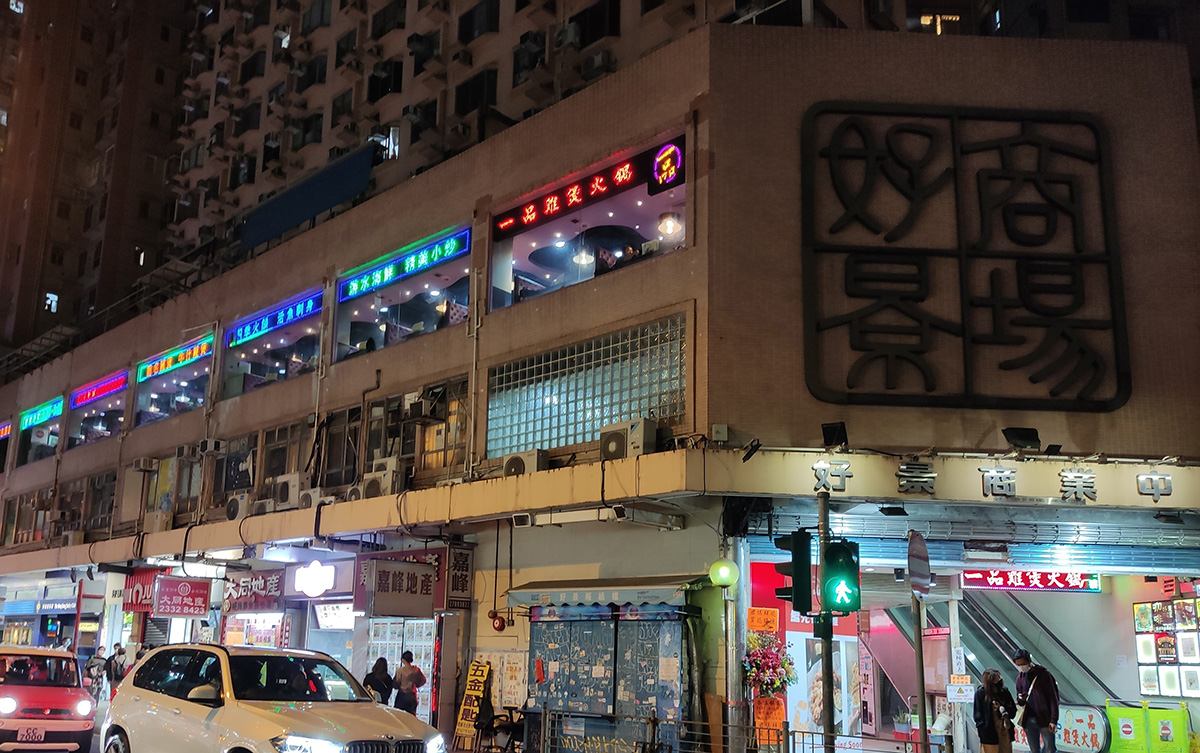 The Ho King Commercial Center in Hong Kong. (Photo Credit: Pooduazrh Lam2, CC BY-SA 4.0, via Wikimedia Commons)
Policy Brief | A New Game of Whack-a-Mole: Iran’s Use of High Diversion Risk Addresses
Iran continues to obtain large volumes of electronic components and other commonly traded items with military applications through Hong Kong-based shell companies, despite a years-long effort by the United States and its partners to slow this trade. A novel policy by the U.S. Commerce Department, first introduced in 2024 against Russia, targets this pipeline by imposing export license requirements on all shipments of controlled goods to specific addresses that pose a high risk of diversion to defense industries. This brief examines the application of the policy to a longstanding China-based Iranian procurement network in order to illustrate how it works in practice, how Iran has responded to it, and how the policy could be refined to ensure it remains effective into the future.
___________________
ENTITIES OF CONCERN
In late 2025, the U.S. Commerce Department added several companies based in Turkey and the UAE to its Entity List for exporting controlled U.S.-origin goods to Iran in violation of U.S. law.
An Iran and UAE-based shipping company; has acted as a witting facilitator for Hossein Hatefi Ardakani, who oversees a procurement network supporting Iran's IRGC Aerospace Force Self-Sufficiency Jihad Organization and its production of unmanned aerial vehicles (UAVs).
Sisdoz Aritma Ve Pompa Teknolojileri Sanayi Ticaret Anonim Sirketi
A Turkey-based supplier of industrial pumps and equipment; with UAE-based Royal Impact Trading L.L.C., has exported U.S.-origin reciprocating positive-displacement pumps to Iran in apparent violation of the Export Administration Regulations (EAR).
A UAE-based trading company and distributor of aircraft parts; has exported items on the Commerce Control List (CCL) from the United States to Iran and Russia in apparent violation of the Iranian Transactions and Sanctions Regulations and the EAR.
___________________
IN THE NEWS
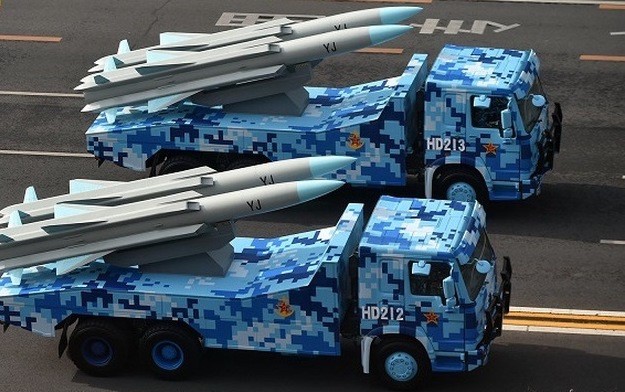 Chinese YJ-12 anti-ship cruise missile system, of which the CM-302 is the export version. (Photo Credit: U.S. Army TRADOC OE Data Integration Network)
In Iran Talks, U.S. Brings Tough Demands, Growing Military Presence | Wall Street Journal
February 26, 2026: The latest round of U.S.-Iran negotiations ended without a deal. U.S. negotiators demanded that Iran dismantle its nuclear facilities at Fordow, Isfahan, and Natanz and turn over its remaining enriched uranium stockpile to the United States, and they insisted that the terms of any deal have no expiration. Iran rejected transferring its enriched uranium abroad and objected to ending enrichment, destroying nuclear sites, or permanent limits on its nuclear program. Iran proposed reducing its enrichment level to 1.5%, pausing enrichment for a period of years, or enriching uranium through an Arab-Iranian consortium based in Iran. The United States may consider allowing Iran to enrich a limited amount of uranium for its research reactor in Tehran, according to U.S. officials. The talks took place in Geneva and were mediated by Oman's foreign ministry, which said technical experts would continue to negotiate in Vienna the following week. Meanwhile, an additional destroyer joined the U.S. fleet in waters near Iran, and a U.S. aircraft carrier approached the Eastern Mediterranean. U.S. Secretary of State Marco Rubio said Iran's refusal to discuss its ballistic missile program was a major problem for the United States.
Iran Nears Deal to Buy Supersonic Anti-Ship Missiles from China | Reuters
February 24, 2026: Iran is nearing a deal with China to purchase Chinese-made CM-302 supersonic anti-ship cruise missiles, according to multiple unnamed sources. The negotiations began in 2024 or earlier, but accelerated when Iranian deputy defense minister Massoud Oraei visited China after the Israel-Iran war in 2025. China's Foreign Ministry said it was unaware of the reported talks. The missiles are produced by state-owned China Aerospace Science and Industry Corporation (CASIC). Iran is also negotiating the acquisition of Chinese man-portable surface-to-air missiles, according to the same sources.
Iran Agreed Secret Shoulder-Fired Missile Deal with Russia | Financial Times
February 22, 2026: Iran and Russia agreed to a nearly €500 million arms deal which would give Iran 2,500 9M336 shoulder-fired surface-to-air missiles and 500 Verba man-portable launch units. The contract was signed in December 2025 and provides for deliveries in three tranches between 2027 and 2029. However, a source close to the project said that a smaller number of systems may have been delivered early, and Iran’s ambassador to Russia implied that multiple recent cargo flights contained military hardware. The Verba system is designed to target cruise missiles, low-flying aircraft and drones at a range of 6 kilometers, and can be operated without fixed radar installations. Iran requested the systems in July 2025 after its 12-day war with Israel.
__________________
FROM THE LIBRARY
The United States designated networks of entities involved in Iranian arms proliferation, support to proxies, and sanctioned oil trade.
- The Treasury Department froze the assets of entities involved in procurement for Iran’s missile and drone programs, as well as shadow fleet vessels and companies exporting Iranian oil – February 25
- The Treasury Department targeted a commodities shipping scheme backed by Iran that generated revenue for Hezbollah – February 10
- The State Department sanctioned vessels, trading companies, and associated individuals involved in Iran’s petrochemical trade – February 6
The United States and its allies continued to respond with sanctions to the Iranian government’s violent repression of protests in January.
- The European Union listed the IRGC as a terrorist organization – February 19
- The U.S. State Department imposed visa restrictions on Iranian officials and telecommunications industry leaders for complicity in human rights abuses – February 18
- The United States and the United Kingdom designated Iran’s interior minister and several IRGC commanders, as well as an Iranian money laundering ring that has processed illicit cryptocurrency transactions – January 30 and February 2
- The European Union sanctioned Iranian government officials and IRGC and law enforcement commanders for serious human rights abuses, as well as several software companies for their role in censorship – January 29