
Publication Type:
- Newsletters
This month’s newsletter features a profile of the Islamic Revolutionary Guard Corps (IRGC), a parallel military force that is central to Iran’s activities of proliferation concern and is responsible for protecting Iran's Islamic Republic government and extending its influence abroad. The IRGC has operational control over Iran's ballistic missiles and drones and has been responsible for directing strikes against U.S. forces, commercial shipping, and regional countries during the current war.
In addition, the IRGC has wide-ranging commercial, institutional, and financial interests and is active in supporting Iran’s network of proxy groups and allied militants abroad. This newsletter features profiles of IRGC-controlled universities and business conglomerates, as well as news about the IRGC’s provision of missile components and advisers to the Houthis in Yemen.
Other news developments featured below include Iran’s planned purchase of man-portable air defense systems from China and the transfer of Iran’s gas centrifuges to a fortified nuclear site. Additions to the Iran Watch library include official statements related to the resumption of fighting in the Gulf and beyond, as well as new U.S. sanctions announcements.
Sign up to receive the newsletter in your inbox.
___________________
PUBLICATIONS
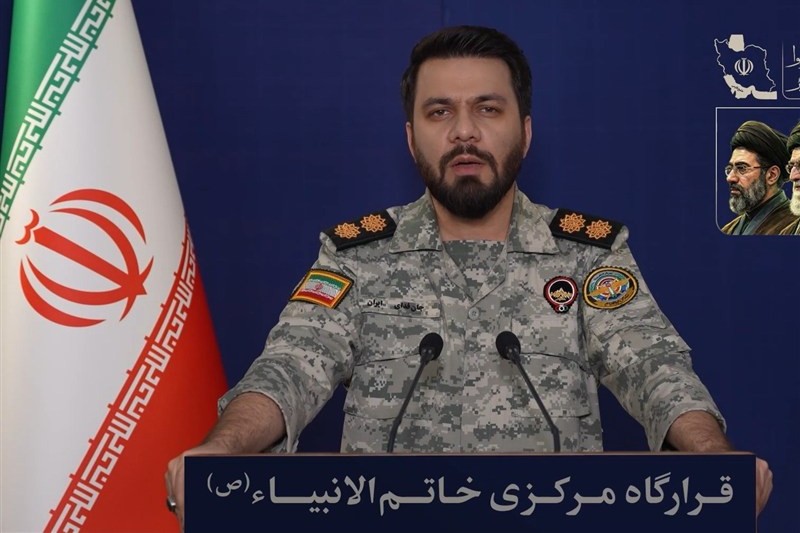 IRGC Colonel Ebrahim Zolfaghari, spokesman for the Khatam al-Anbiya Central Headquarters, makes a press statement. (Image Credit: Tasnim News Agency)
Entity Profile | Islamic Revolutionary Guard Corps (IRGC)
The IRGC is an Iranian military force created following the Islamic Revolution in 1979 that operates independently from and in parallel to Iran's conventional armed forces and reports directly to the Iranian Supreme Leader. According to the U.N. Security Council, the IRGC is involved in Iran's proliferation-sensitive nuclear activities and the development of nuclear weapon delivery systems. It also has operational control over Iran's ballistic missile program and has undertaken procurement attempts for Iran's ballistic missile and nuclear programs, according to the European Union. The corps’ network has provided financial and material support, weapons, and training to terrorist groups and militants across the Middle East and has planned, orchestrated, or carried out terrorist attacks worldwide.
___________________
ENTITIES OF CONCERN
The IRGC controls several universities, foundations, and business conglomerates which it uses to advance its interests.
A university and military academy overseen by the IRGC that is involved in nuclear, missile, chemical weapon, and military research; has conducted research on chemical agents intended to incapacitate; has reportedly worked on developing a solid-fuel satellite launch vehicle in cooperation with the IRGC Research and Self-Sufficiency Jihad Organization.
Baqiyatallah University of Medical Sciences
A military medical school that is the primary medical institution for the IRGC; in cooperation with scientists from Imam Hussein University, faculty members have conducted research on viral strains that can be used as biological weapon agents.
Khatam-al Anbiya Construction Headquarters (KAA)
An IRGC-owned conglomerate that acts as a prime contractor on projects for Iran's ballistic missile and nuclear programs; involved in large-scale civil and military construction and engineering projects; profits from infrastructure construction are used by the IRGC to fund illicit activities.
___________________
IN THE NEWS
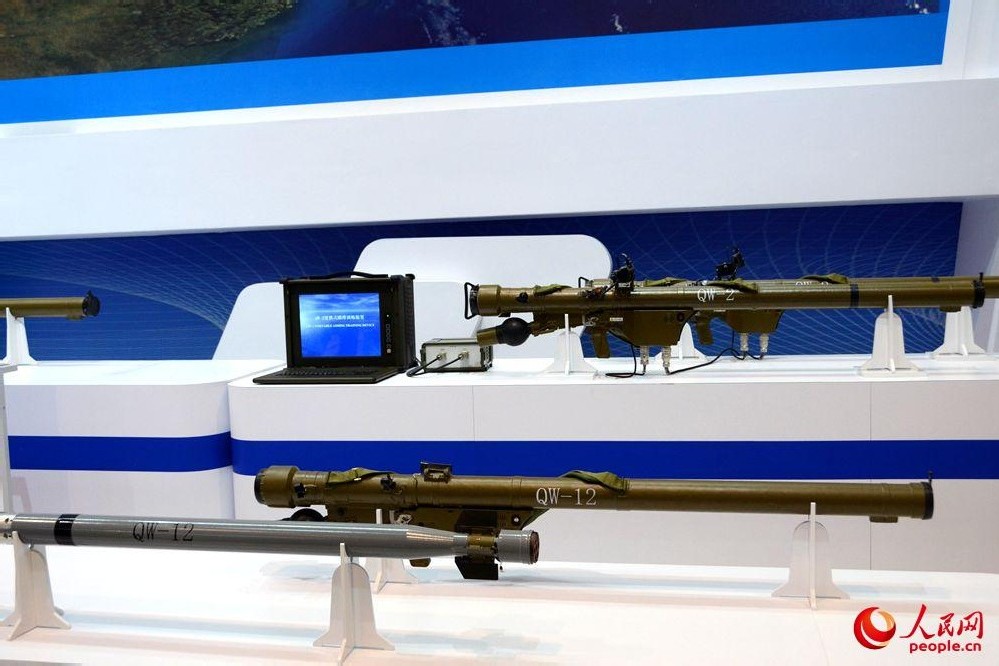 A Chinese QW-12 man-portable air defense system. (Photo Credit: People’s Daily)
Iran to Get Chinese Shoulder-Launched Missile Systems in Weeks, Sources Say | Reuters
July 28, 2026: Iran contracted to purchase between 300 and 400 man-portable air defense systems (MANPADS) from China, which it expects to receive within weeks. Reuters sources claimed that the contract is worth USD $60-70 million and includes Chinese-made QW-12 and FN-16 infrared-guided surface-to-air missiles capable of engaging helicopters, drones, and low-flying fixed-wing aircraft. The contract was signed by Zhongqing Baoshang International Investment, a Hong Kong subsidiary of Beijing-based company Zhong Qing Bao Shang Group serving as an intermediary between Iran and the Chinese supplier. The parties to the transaction agreed for the shipment to initially travel by air from Urumqi, China, and then transit through Pakistan to Iran. China's foreign ministry and the Pakistani military denied the report. Western intelligence sources and an Iranian official told Reuters that Tehran has also considered using overland routes to transport Chinese military supplies and dual-use goods to Iran.
Iran Flew IRGC Commanders, Missile Gear to Yemen's Houthis, Sources Say | Reuters
July 23, 2026: Islamic Revolutionary Guard Corps (IRGC) personnel traveled to Yemen with missile- and drone-related equipment on a Mahan Air flight from Tehran to Sana'a on July 13, according to Yemen's internationally-recognized government and Iranian sources. The aircraft had originally brought a Houthi delegation to Tehran on July 3 for the funeral of Supreme Leader Ali Khamenei. The Iranian sources said the return flight contained between 10 and 21 IRGC military advisers, including senior commanders, who intended to train the Houthis on a new missile system and who also brought gold intended to fund Houthi operations. The aircraft was forced to divert to Hodeidah when the Yemeni government carried out an airstrike on the Sana'a airport before the plane could land. The incident prompted the Houthis to declare a naval blockade against Saudi Arabia, whom they blamed for the airport strike.
Israel Believes Iran Moved Nuclear Centrifuges into Pickaxe Mountain | Wall Street Journal
July 21, 2026: Israeli intelligence concluded that Iran moved thousands of gas centrifuges to its Pickaxe Mountain (Mount Kolang) underground nuclear site following the June 2025 war. The site contains a fortified tunnel network and was originally commissioned as a replacement for a centrifuge assembly facility at Natanz that was damaged by sabotage in 2020. The International Atomic Energy Agency (IAEA) has not had access to the site and has received no information from Iran about its purpose beyond a 2021 statement that Iran intended to carry out nuclear activities there. Israel believes that centrifuges were transferred there in the fall of 2025. Pickaxe Mountain has not been struck during the 2026 war between Iran and the United States and Israel, but U.S. President Donald Trump stated that it is a possible target for a U.S. attack.
__________________
FROM THE LIBRARY
U.S.-Iran combat renewed in July as Iran sought to assert control over the Strait of Hormuz, while fighting threatened to spread beyond the Gulf.
- Iran attacked three vessels transiting the Omani side of the Strait, prompting two days of U.S. retaliatory strikes – July 7
- Iran struck another vessel days later, kicking off nearly two weeks of continuous fighting that included strikes on Gulf countries and the deaths of U.S. servicemembers in Jordan – July 11-23
- France, Germany, and the United Kingdom condemned Iranian attacks on shipping and regional countries – July 12
- The United States resumed its naval blockade of Iran – July 13
- Ukraine struck an Iranian vessel in the Caspian Sea that it believed was aiding Russia’s war effort, prompting a diplomatic confrontation between the two countries – July 25 and 28
- Iran and Oman held negotiations about maritime passage in the Strait – July 26
- The United States and Saudi Arabia carried out a joint strike against Iran-backed militias in Iraq that they claimed were responsible for attacks in the Gulf – July 28
- Direct fighting between the United States and Iran resumed again following a few days’ pause – July 29
- An unclaimed drone attack caused a fire on two vessels in Egypt’s Damietta port near the Mediterranean entrance to the Suez Canal – July 30
The United States resumed its sanctions campaign against Iran, which coincided with a court verdict in an export enforcement case and Britain’s decision to further sanction the IRGC.
- The U.S. Treasury Department revoked its license allowing the unrestricted sale of Iranian oil – July 7
- A new round of sanctions designations targeted a financial network supporting Iranian Supreme Leader Mojtaba Khamenei – July 10
- The United Kingdom designated the IRGC as a state threat, enabling criminal penalties against those who support it in the U.K. – July 13
- An American man was convicted in U.S. court for his role in an illicit export scheme to supply the IRGC with drone components – July 14
- Additional sanctions were imposed on entities controlled by Iranian financier Babak Zanjani – July 24
- The Treasury Department placed secondary sanctions on the Iranian entities set up to collect fees from vessels transiting the Strait of Hormuz, placing shipping companies that pay them at risk of a U.S. asset freeze – July 29