
Publication Type:
- Articles and Reports
Weapon Program:
- Drone
- Nuclear
- Missile
- Military
This update is drawn from the March 2026 Iran Watch newsletter.
The United States and Israel have been at war with Iran for one month. What is the status of Iran’s weapon programs? This article provides a brief overview of what is known from open sources about the current state of Iran's missile, drone, and nuclear programs.
Missile
Iran’s missile arsenal has been degraded but not exhausted. Top U.S. commanders claim that daily Iranian missile and drone launches are down approximately 90 percent since the first days of the war, and Israel claims to have neutralized 70 percent of Iran’s missile launchers. Independent analysis of satellite imagery suggests Iran’s ability to produce missile propellant—and therefore to build new missiles—has been temporarily halted due to damage to key facilities.
Yet Iran continues to maintain a baseline rate of fire, and some Iranian missiles have managed to penetrate air defenses and damage military, infrastructure, and civilian targets in Israel and the Gulf states. Iran has made greater use of cluster munition warheads than it did in earlier exchanges of fire and has shown itself to possess ballistic missiles with longer ranges than previously thought. The United States reportedly is able to assess with confidence only that it has destroyed one third of Iran’s stock of ballistic missiles and damaged or rendered inaccessible another third. If accurate, that would likely leave Iran with between a few hundred and a couple thousand missiles available for use before it is constrained by its apparent production bottleneck.
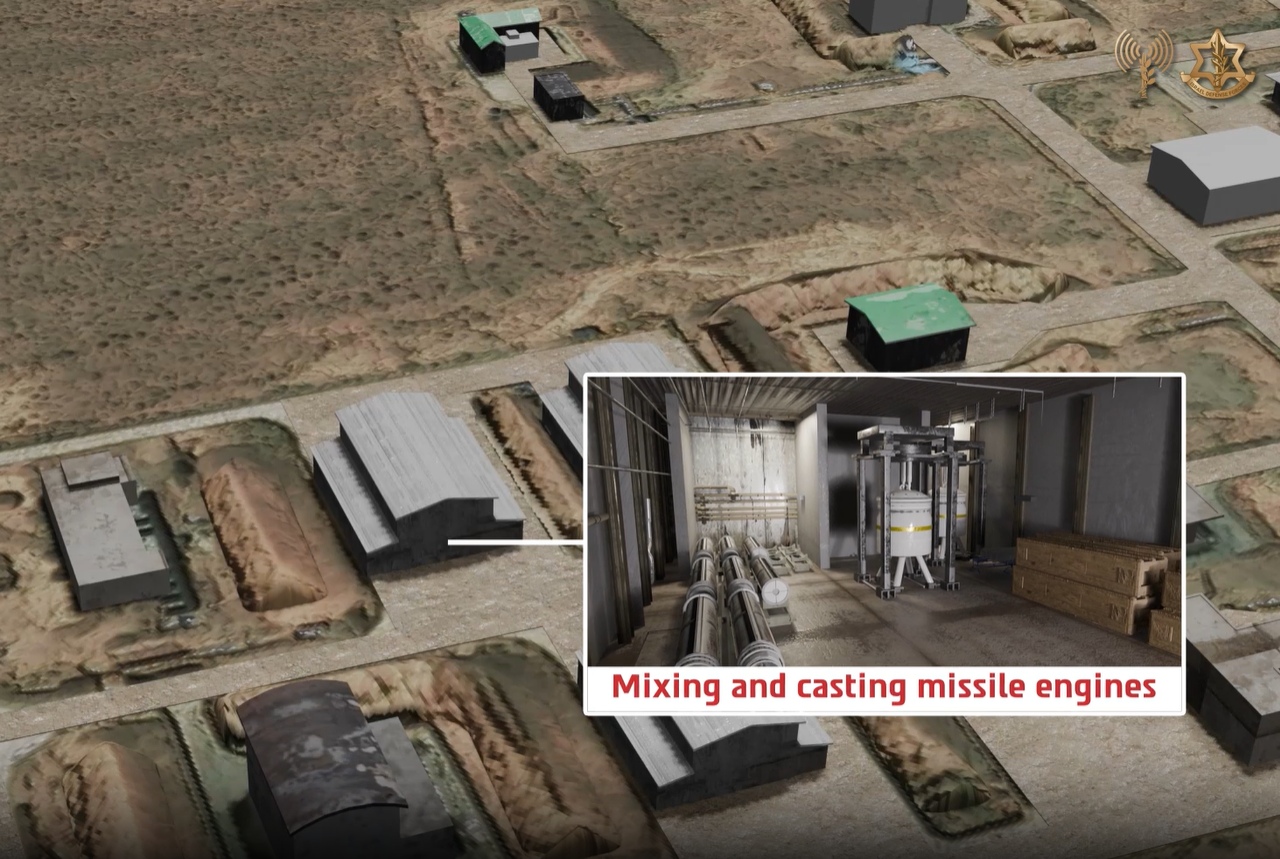 A graphic of a missile propellant production site in Shahroud. (Photo Credit: Israel Defense Forces)
Drone
The status of Iran’s presumably much larger drone arsenal is less clear, though drone storage sites and production facilities have also been targeted by U.S. and Israeli strikes. Long-range suicide drones such as the Shahed-136 have comprised a damaging part of Iran’s strikes on Gulf infrastructure and commercial ships transiting the Strait of Hormuz. In a unique example of a proliferation feedback loop, Russia is also reportedly supplying Iran with drone warfare advice, components, and a pending shipment of Geran-2 drones—an improved version of the Shahed-136 model that Tehran supplied to Moscow early in the Russia-Ukraine war.
Nuclear
The current war has focused less on Iranian nuclear sites, many of which were severely damaged by U.S. and Israeli strikes in June 2025. But the Iranian nuclear program remains a primary concern. Early in the war, Israel struck a compound near Tehran where it said Iranian nuclear scientists had moved their weaponization work following the June strikes. Crucially, more than 400 kilograms of uranium enriched to 60% purity—enough to fuel 10-12 nuclear weapons—remain in Iran, with much of it likely buried in underground tunnels near Esfahan. Accounting for and securing that material, whether through a military operation or a negotiated end to hostilities, is essential to achieving the U.S. war aim of preventing Iran from acquiring a nuclear weapon.