
Publication Type:
- Newsletters
This month’s newsletter features an update to a running timeline of Iran’s missile milestones. Since the last update, Iran fired missiles in two wars against Israel and the United States, launched an intermediate-range ballistic missile for the first time, suffered damage to its production facilities, and received repeated shipments of missile propellant ingredients from China.
The newsletter also features profiles of companies and individuals involved in an international network that has supplied Iran with missile propellant precursors from China and elsewhere, as well as news about Iran’s surviving missile stockpile following the U.S.-Iran ceasefire, the Islamic Revolutionary Guard Corps (IRGC)’s use of a Chinese satellite, and wartime deliveries of Chinese-origin sodium perchlorate to Iran. Additions to the Iran Watch library include official statements related to the U.S.-Iran war and new U.S. sanctions announcements.
Sign up to receive the newsletter in your inbox.
___________________
PUBLICATIONS
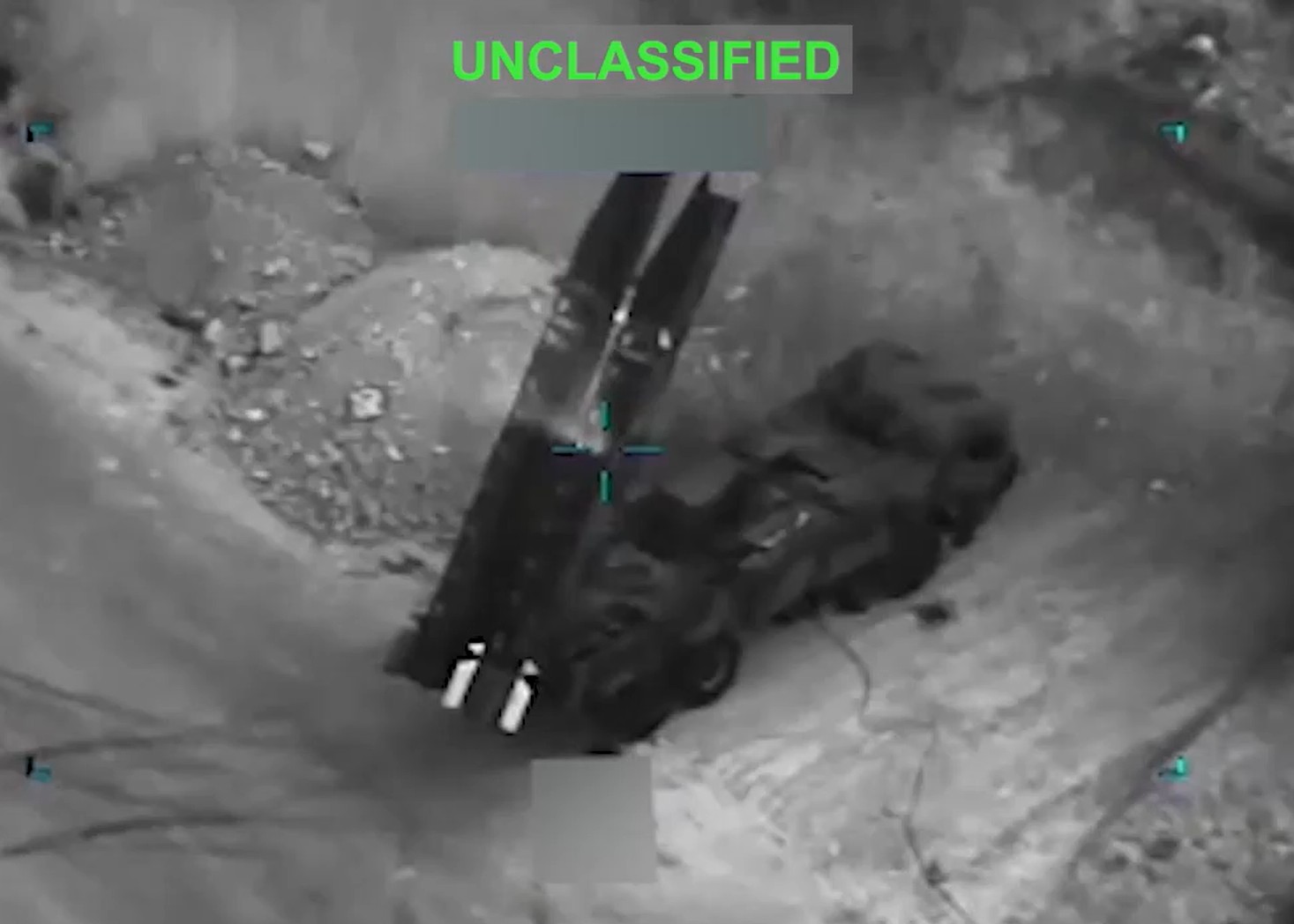 An Iranian missile launcher being targeted in a U.S. strike. (Photo Credit: U.S. Central Command Public Affairs)
Timeline | Iran’s Missile Milestones
Since the start of 2025, Iran has launched hundreds of missiles in two wars against Israel and the United States. Iran suffered extensive losses to its missile arsenal and damage to its missile production facilities in both conflicts, but made substantial progress in replenishing its missile stocks following the June 2025 war. In that time, Iran was assisted in rearming by repeated shipments of missile propellant ingredients from China. During the 2026 war, Iran notably launched two missiles at the Diego Garcia military base in the Indian Ocean—a target 4,000 kilometers away from Iran, thereby marking Iran’s first documented use of an intermediate-range ballistic missile and scrapping Tehran’s earlier self-imposed 2,000-kilometer missile range limit.
___________________
ENTITIES OF CONCERN
Iran has a high demand for missile propellant ingredients to replenish its ballistic missile arsenal following losses and expenditures in its fighting against the United States and Israel. Iran has sourced most of these precursors from China with the aid of international networks.
A German national who together with Majid Dolatkhah and Vahid Qayumi leads the MVM partnership, a network that has coordinated the procurement of ballistic missile propellant ingredients on behalf of Parchin Chemical Industries (PCI).
A United Arab Emirates-based company; part of the MVM Partnership, which has procured hundreds of metric tons of missile propellant ingredients from China since 2023, including sodium chlorate, sodium perchlorate, and sebacic acid.
An India-based company involved in the MVM Partnership; exported cotton linter to Iran and the United Arab Emirates; cotton linter is an ingredient in the production of nitrocellulose, which is used in rocket propellant.
___________________
IN THE NEWS
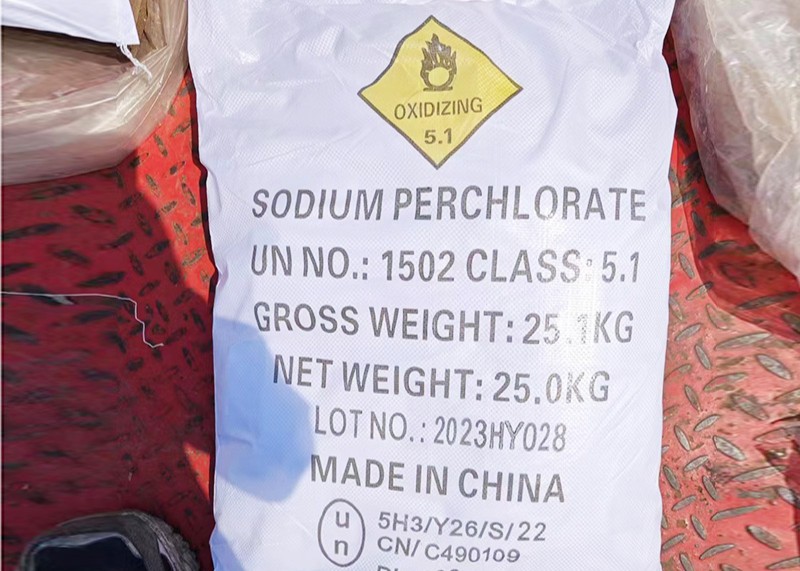 Chinese-origin sodium perchlorate. (Photo Credit: China Chlorate Tech Co Limited)
For Iran, Flexing Control Over Waterway Is New Deterrent | New York Times
April 18, 2026: U.S. military and intelligence officials estimate that Iran retains approximately 40 percent of its arsenal of attack drones and more than 60 percent of its missile launchers following the U.S.-Israeli bombing campaign against it. Iran had access to half of its launchers at the time of the ceasefire, but subsequently recovered approximately 100 launchers that had been buried inside underground fortifications. Iran is also in the process of recovering buried missiles. Some U.S. assessments estimate that Iran could recover up to 70 percent of its pre-war stock of missiles.
Iran Used Chinese Spy Satellite To Target US Bases | Financial Times
April 15, 2026: The Islamic Revolutionary Guard Corps (IRGC) Aerospace Force purchased a remote-sensing satellite from China that it used to target U.S. forces during its war against the United States and Israel. The satellite was built and launched from China by a Chinese company, and then sold to the IRGC Aerospace Force after launch. To operate the satellite, the IRGC Aerospace Force was given access to ground-control stations operated by another Chinese firm. Iran may have used the satellite to collect targeting data for a March 14 strike on Prince Sultan Air Base in Saudi Arabia which damaged five U.S. refueling planes, as well as strikes on other U.S. bases in the region.
China Fuelling Iran's Ballistic Missiles | The Telegraph
April 3, 2026: Four sanctioned, Iran-flagged ships - Hamouna (previously Canreach), Barzin, Shabdis and Rayen - believed to be carrying the missile propellant precursor sodium perchlorate from China have docked at Iranian ports since the start of the war between Iran and the United States and Israel. Another vessel thought to be carrying sodium perchlorate, Zardis, was offshore near Iranian waters. All of the vessels departed from Gaolan port in Zhuhai, China, which contains some of China's largest chemical storage terminals. They were owned by Iran's state-owned shipping company, Islamic Republic of Iran Shipping Lines (IRISL). Most of the ships turned off their Automated Identification System (AIS) at some point during their journey, and two falsely reported their destination as Vietnam.
__________________
FROM THE LIBRARY
The war between Iran, the United States, and Israel shifted to a lower-intensity phase.
- Iran and the United States agreed on a ceasefire, with both sides claiming victory – April 8
- Negotiations in Pakistan failed to result in a permanent peace agreement – April 12
- The United States began a naval blockade of Iranian ports, while Iran kept the Strait of Hormuz closed – April 13
- U.S. Chairman of the Joint Chiefs of Staff General Dan Caine said that the U.S. military would seek to interdict Iranian vessels in the Pacific region – April 16
- France and the United Kingdom convened a meeting of 51 countries to discuss efforts to reopen the Strait of Hormuz – April 17
- The U.S. Navy intercepted and seized an Iranian-flagged vessel attempting to run the blockade – April 19
- General Caine said that 34 vessels had been turned back by the U.S. blockade – April 24
The United States initiated a sanctions effort dubbed “Operation Economic Fury.”
- The U.S. Treasury Department targeted entities involved in major Iranian oil smuggling networks – April 15
- The Treasury Department sanctioned several commanders of Iraqi militias linked to Iran – April 17
- The Justice Department charged an Iranian national in California with selling Iranian-made weapons to Sudan – April 20
- The United States froze the assets of entities in several networks procuring items for Iran’s missile and drone programs – April 21
- The Treasury Department sanctioned a Chinese refinery and entities involved in shipping sanctioned Iranian oil – April 24
- The Treasury Department’s Office of Foreign Assets Control issued an advisory about the sanctions risk associated with Chinese “teapot refineries” that purchase Iranian oil – April 28
- The Treasury Department sanctioned several front companies involved in Iran’s shadow banking networks – April 28