
Publication Type:
- Newsletters
Beginning early on February 28, the United States and Israel carried out a large-scale attack on Iran, which Iran answered with missile and drone strikes throughout the Middle East. U.S. and Israeli strikes and Iranian retaliatory actions remain ongoing, and comments from senior officials suggest that they may continue for weeks, if not longer. This special newsletter includes a roundup of what we know about the war so far, as well as links to a variety of Iran Watch resources helpful to understanding the current moment and what might come next.
Sign up to receive the newsletter in your inbox.
____________________
WHAT WE KNOW SO FAR
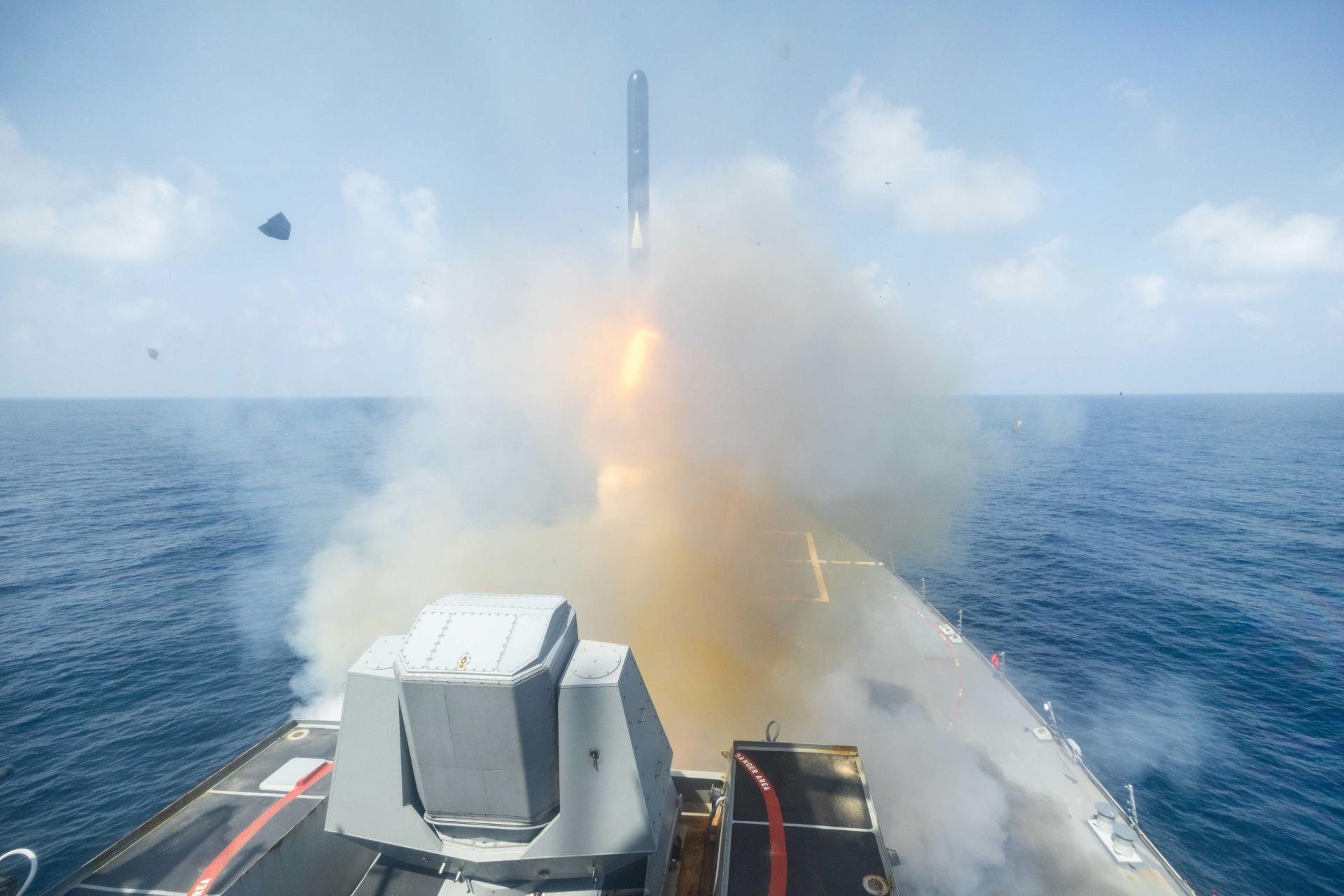
A U.S. Navy vessel launches a missile as part of Operation Epic Fury (Photo Credit: U.S. Central Command)
On Saturday morning, U.S. President Donald Trump announced the start of "major combat operations in Iran" and outlined several broad objectives:
- "Destroy [Iran’s] missiles and raze [its] missile industry to the ground"
- "Annihilate [Iran’s] navy"
- "Ensure that the [Iran’s] terrorist proxies can no longer destabilize the region or the world and attack [U.S.] forces"
- "Ensure that Iran does not obtain a nuclear weapon"
President Trump also urged Iranians to "take over your government" following the U.S. and Israeli campaign. Israeli Prime Minister Benjamin Netanyahu directly articulated regime change as an objective, stating that purpose of the joint operation was "to remove the existential threat posed by the terrorist regime in Iran." An Israeli strike early in the operation killed Iran’s Supreme Leader, Ayatollah Ali Khamenei.
The U.S. and Israeli militaries have carried out strikes across Iran, particularly in Tehran and in the western and southern parts of the country. Targets have reportedly included missile launch sites and production facilities, naval vessels and ports, government buildings, military bases, facilities used by Iranian intelligence and internal security forces, and energy industry infrastructure. The International Atomic Energy Agency (IAEA) stated this morning that it had "no indication that nuclear facilities have been hit," but Iran’s ambassador to the IAEA claimed that the Natanz site had been struck.
Israel also claimed to have killed several senior Iranian officials in addition to Khamenei, including:
- Major General Abdolrahim Mousavi, the chief of the Armed Forces General Staff (Iran’s top military officer)
- Major General Mohammad Pakpour, the overall commander of the IRGC
- Rear Admiral Ali Shamkhani, a military adviser to the Supreme Leader
- Brigadier General Aziz Nasirzadeh, Iran’s defense minister
- Reza Mozaffarinia, head of the Organization for Defensive Innovation and Research (SPND), which has been involved in nuclear weapons research
- Hossein Jabal Amelian, whom Israel has claimed to be the current head of the SPND
As of this writing, Iranian president Masoud Pezeshkian, foreign minister Abbas Araghchi, Supreme National Security Council secretary Ali Larijani, and parliament speaker Mohammad Baqer Qalibaf were apparently unharmed.
Iran quickly retaliated with drone and missile attacks against Israel and U.S. military installations in the Middle East, as well as with strikes against a variety of military and nonmilitary targets in the region. Third countries known to have been hit or targeted by Iranian strikes so far have included Bahrain, Jordan, Kuwait, Oman, Qatar, Saudi Arabia, and the United Arab Emirates. Hezbollah launched rockets and drones at Israel early this morning, prompting retaliatory Israeli strikes in Lebanon, and Iran-linked groups have attacked bases used by U.S. forces in Iraq. Iranian drones additionally struck a British military base in Cyprus, and an Iranian missile reportedly struck a building in southern Syria.
Information on damage assessments and casualties has been limited. Some deaths have been reported in Israel and the Gulf countries. The number of casualties in Iran is difficult to assess, but likely numbers in the hundreds. U.S. Central Command said it had destroyed 11 Iranian naval vessels in the Gulf of Oman. The U.S. military also acknowledged the deaths of three servicemembers, reportedly in an Iranian missile attack on a U.S. base in Kuwait, and three U.S. fighter aircraft were shot down in a friendly fire incident over Kuwait.
President Trump has said he expects that the United States will likely experience additional casualties and that the campaign could last for several weeks. A clear picture of the extent of damage to military, missile, and nuclear sites within Iran could take weeks or longer to emerge.
____________________
IRAN WATCH RESOURCES
Reference | Table of Iran’s Missile Arsenal
Iran is using its extensive missile arsenal to retaliate against the United States, Israel, and other U.S. allies. Destroying Iran’s missile stockpile is also a stated U.S. objective. This table sets forth what is publicly known, claimed, or estimated about the capabilities of Iran's missiles.
Reference | Table of Iranian Nuclear Sites and Related Facilities
Iranian nuclear sites are likely to be targeted in U.S. and Israeli strikes. This table lists the facilities Iran has declared to the IAEA and known undeclared facilities relating to Iran’s nuclear fuel cycle and weaponization effort. Each entry gives the facility’s purpose, location, and, where known, its operating status following the Israel-Iran war in June 2025. Since then, Iran has barred the IAEA from inspecting most of these nuclear sites.
Podcast | How to Keep Iran from the Bomb?
The Foundation for Defense of Democracies (FDD)’s Behnam Ben Taleblu and the Washington Institute for Near East Policy’s Michael Eisenstadt sat down with us last April to discuss, among other things, the likely scenarios following military strikes on Iran.
Report | Leveling the Field: Iran’s Asymmetric Use of Conventional Military Capabilities
The U.S.-Israeli attack and Iran’s response have triggered the regional war long contemplated by experts and military planners. This report examines Iran’s asymmetric military capabilities, including strike and naval assets it can be expected to use in the Persian Gulf theater.
Report | Hidden Among the Rubble: Iran’s Post-Strike Weapon Potential
Iran’s uranium enrichment program was substantially set back in June 2025, and the current round of fighting may degrade Iran’s nuclear capabilities further. However, the IAEA has been unable to verify for nearly a year that nuclear materials have not been diverted from Iran’s declared sites. This report examines scenarios for a clandestine Iranian attempt to make nuclear weapons.
____________________
INTERNATIONAL REACTION
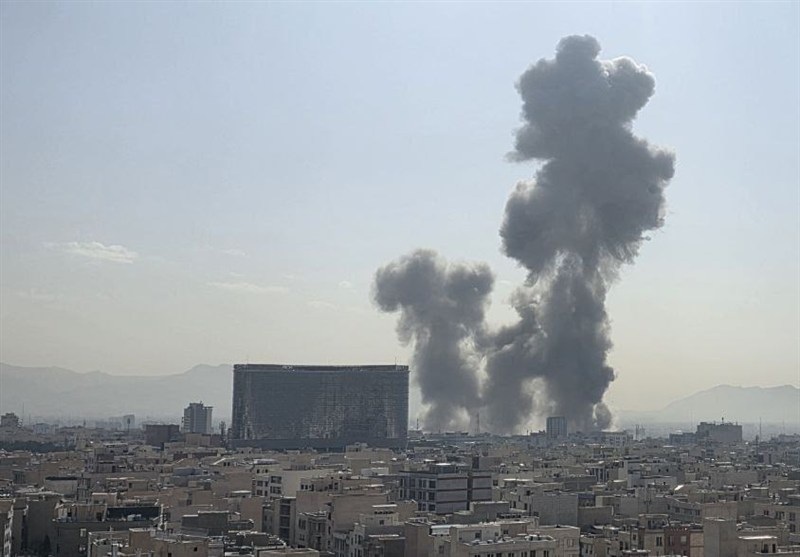
Smoke rises over Tehran (Photo Credit: Tasnim News Agency)
Governments around the world and international organizations comment on the war.
- IAEA Director General Rafael Grossi said that no elevated radiation levels have been detected in the region, but warned against strikes on nuclear sites in both Iran and other countries
- Grossi also said that, due to its lack of access since June, the IAEA could not guarantee that Iran had not diverted nuclear material from sites affected by the 2025 strikes
- The United States, several of the Gulf countries, and Jordan released a joint statement condemning Iranian strikes on those countries’ territories
- France, Germany, and the United Kingdom (the “E3”) distanced themselves from the U.S.-Israeli action
- The E3 also issued a joint statement decrying Iran’s regional strikes, which they noted targeted some countries not involved in the initial U.S.-Israeli operation
- The European Union expressed concern and urged restraint, while also criticizing Iran’s nuclear program and human rights abuses
- The U.N. Secretary General, Iraq, and Oman criticized both the U.S.-Israeli action and Iran’s retaliatory strikes
- China condemned the U.S.-Israeli strikes but also called for the Gulf states’ security to be respected
- Russia vehemently denounced the U.S.-Israeli operation